Brilliant quote from Jillian Michaels on mental encouragement:
"When it comes to diet and exercise, I forbid you to ever use the phrase: I can't. I'm telling you, there's no such thing! There might be "I don't want tos," but there are absolutely no "I can'ts" from here on out.
Why am I being so hard on you about this? Because I know you can! In fact, I promise that you can do anything you want in this life — if you want it bad enough.
The next time you start to say "I can't," stop yourself and instead say the "antidote" statement, which is "I can." I can lose weight. I can start to exercise. I can get control of my life.
Think about what might be causing you to feel defeated before you even begin, and tackle those negative feelings or memories or harsh life lessons. You have the power to take your life back. Soon you'll see the evidence that you can accomplish your goals, that you are strong and intelligent, and that you deserve everything wonderful that life has to offer. You have nothing to lose and everything to gain!"
Sunday, 18 April 2010
Monday, 12 April 2010
GOALS FOR DIRECTION IN LIFE
Last supper - exquisite toast with Nutella. Last supper before tightening up the diet once again, back to meticulous planning and striving toward a chosen goal. This time, a 5K race. You can't achieve success if you're not moving toward something. Think about your ultimate long-term goal, and then break it down into less overwhelming mini-goals. Then find some incentives to help you stay the course. What kinds of goals am I talking about? The ambitious and attainable ones, of course.
First: Think long and hard about what you want. Make sure your goals are actually things YOU want to achieve, not what society dictates or what your family or friends want for you. Ultimately your life is yours and you must live it for yourself. I know you might be thinking that's selfish, but it's not. After all, who else is going to live your life if you're not? Sometimes being a little selfish is a good thing, especially if it enables you to take care of yourself.
Second: Remember, goals are not inflexible roadblocks meant to make you feel badly about yourself. If you don't accomplish a goal exactly on schedule, so what? You can't predict what life is going to throw your way — but you CAN choose the way you react to situations that come up. That is where your power lies. If you fall off the wagon, just get back on — no ifs, ands, or buts about it.
Third: We all have to be realistic when we set our goals. I'm barely 5 feet 5 inches (167cm) and I have a stocky build. I am never going to be a petite little waif, no matter how hard I work. I also want to make a difference in the world, but something tells me I probably don't stand a good chance becoming the next Angelina Jolie or Madonna. Instead, I set goals that are realistic and productive for myself only. I am 5 feet 5 and stocky, but I am going to be the most fit 5'5" chick I can be. I might not be Madonna, but I can motivate people how to be healthier and happier through fitness and be an inspiration to those near me if at all possible.
Does this make sense? The bottom line is that goals provide direction. They help bring a focus to our lives so that we can live our dreams — no matter how big or how small they may be.
First: Think long and hard about what you want. Make sure your goals are actually things YOU want to achieve, not what society dictates or what your family or friends want for you. Ultimately your life is yours and you must live it for yourself. I know you might be thinking that's selfish, but it's not. After all, who else is going to live your life if you're not? Sometimes being a little selfish is a good thing, especially if it enables you to take care of yourself.
Second: Remember, goals are not inflexible roadblocks meant to make you feel badly about yourself. If you don't accomplish a goal exactly on schedule, so what? You can't predict what life is going to throw your way — but you CAN choose the way you react to situations that come up. That is where your power lies. If you fall off the wagon, just get back on — no ifs, ands, or buts about it.
Third: We all have to be realistic when we set our goals. I'm barely 5 feet 5 inches (167cm) and I have a stocky build. I am never going to be a petite little waif, no matter how hard I work. I also want to make a difference in the world, but something tells me I probably don't stand a good chance becoming the next Angelina Jolie or Madonna. Instead, I set goals that are realistic and productive for myself only. I am 5 feet 5 and stocky, but I am going to be the most fit 5'5" chick I can be. I might not be Madonna, but I can motivate people how to be healthier and happier through fitness and be an inspiration to those near me if at all possible.
Does this make sense? The bottom line is that goals provide direction. They help bring a focus to our lives so that we can live our dreams — no matter how big or how small they may be.
Wednesday, 7 April 2010
CAN WHEY PROTEIN HELP YOU DROP BODY FAT?
Sleep, genetics, your training program, stress and what you eat all play a role in how your body looks and how you feel. If you've made changes to what, when and how much you eat as well as your training program, but you still can't seem to drop that stubborn body fat, consider how the bodybuilding supplement whey protein may help.
What Is Whey Protein?
Whey protein is a milk protein that is the liquid by-product of cheese production. In supplement form, whey protein comes in three main forms:
Whey Protein Concentrate: Contains some fat and lactose and between 29% - 89% protein depending on the specific product. Whey protein concentrates often have more bioactive compounds.
Whey Protein Isolates: Contains minimal fat, cholesterol and lactose and 90% or more protein.
Whey Protein Hydrolysates: Are often used in clinical nutrition applications because they are predigested and partially broken and therefore easier to absorb.
Whey protein has the highest protein digestibility corrected amino acid score (PDCAA) - a measure of both how well a protein is digested and how well it supplies the amino acids needed by an adult. In addition, it is a complete protein meaning it contains all essential amino acids. Whey also contains more branched chain amino acids (BCAAs) than any other source of protein and more leucine than other types of protein.
Several studies indicate that whey protein is beneficial for increasing muscle protein synthesis. Consume whey pre- or post-training and you'll tip the scale in favor of muscle growth and strength gains over time. But, there are a number of other benefits associated with whey protein.
Read full article here.
Sunday, 4 April 2010
BEYOND EASTER
And so the Easter celebrations are wearing off and the body is still rumbling for more food and maybe even alcohol. Pudgy. Bloated. Tired. Sore. What to do about it? Well, beside acknowledging that you had a good time and that sometimes your body needs rest from the gym and meticulous diet in order to become even stronger... the next step is to simply bounce back. Get back on track. Start planning your meals strictly again and workout more vigorously than before, just to snap you back to reality. Balance yourself. Throw away the anxiety, the guilt... and tell the cravings to go away. After all, there is no danger with feeling a bit hungry if you know you just ate a couple of hours ago. The body is clever and the mind sometimes a bit foolish. Jug a pint of water and you should be fine. Often it's more thirst than hunger.
Down to the wire now... more mental than physical. Remember, you're the one in control. Happy Easter!
Saturday, 20 March 2010
BODYPUMP #73
What a butt-kicking BodyPump release #73 we had this morning. The hour flew by and the sweat was dripping. This release is a challenge, which is awesome. It was the most fun I've had in a class in a while... Well, nah, that's not true. ALL my classes are fun! Haha! But this time we were three pink ladies rocking it out on stage. It was truly EPIC! Thanks to all of you who made it and shared this amazing event with us!!!
I was gonna take some pics for you guys, but completely forgot about it once the adrenaline kicked in. Too bad! It was worth seeing for all of you who couldn't be there. Maybe next time... ;)
Thursday, 18 March 2010
BODYCOMBAT LICENS
Rachel Cohen, one of the Program Directors for Body Combat, and beside her is my awesome BC-Trainer Pernilla Blomquist.
Life is still good to me... :)
Tuesday, 16 March 2010
HORMONE HIGHS & LOWS
Okey, I'm gonna get technical on you... The hormones leptin and ghrelin act in a kind of yin-yang relationship when it comes to hunger and satisfaction. Just as leptin tells the brain to turn off hunger, ghrelin tells the brain you're famished.
For the average person, ghrelin levels increase when the stomach is empty. Ghrelin is the reason you always feel hungry at particular moments in the day- your body's clock triggers the release of the hormone according to a finely tuned schedule. Ghrelin will remain elevated until you've given your body enough nutrients to satisfy its needs. Because the hormonal signals that you're satisfied can take time to kick in, eating slowly may help you eat less overall. By the time your stomach fills up, ghrelin levels start to drop again, you feel satisfied, and you stop eating. Sounds easy, right?
Well, constant calorie restriction keeps ghrelin levels high, which may be why some yo-yo dieters feel as if their hunger just keeps getting worse the fewer calories they eat. This is all part of nature's way of telling us, "Eat already!"
You have to stay ahead of ghrelin surges by eating regularly, because ghrelin is crafty about getting you to eat. Some research even shows that ghrelin triggers reward centers in the brain to make food seem even more appealing. Ghrelin triggers these centers when you ordinarily wouldn't need to eat - except you just smelled fresh chocolate chip cookies in the kitchen at work. As we encounter tempting treats throughout our day, this devious ghrelin is probably a big part of what makes maintaining weight loss so challenging. Eating balanced meals every four hours and getting eight hours of sleep (have you ever wondered why you're famished and constatntly hungry the day after a bad night's sleep?!) will help you better manage your ghrelin levels. Saying no to those treats is entirely up to you! After all, it's your body. It's your choice to make.
Sunday, 14 March 2010
QUINOA - SUPER FOOD?
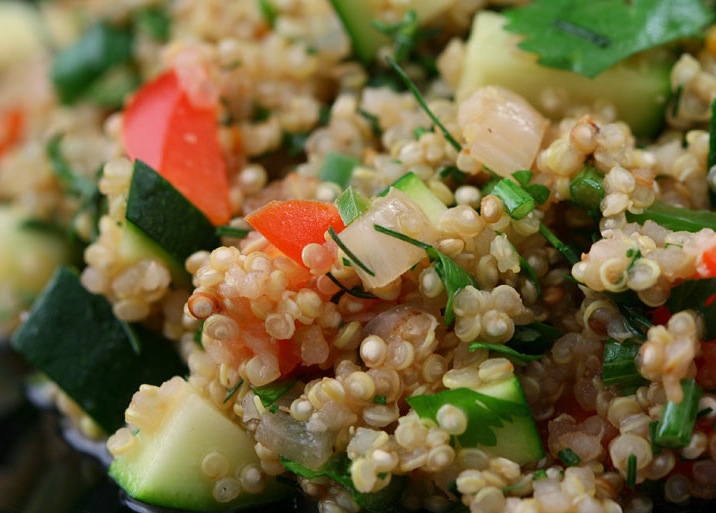
A delish Quinoa sallad
Health Benefits
A recently rediscovered ancient "grain" native to South America, quinoa was once called "the gold of the Incas," who recognized its value in increasing the stamina of their warriors. Not only is quinoa high in protein, but the protein it supplies is complete protein, meaning that it includes all nine essential amino acids. Not only is quinoa's amino acid profile well balanced, making it a good choice for vegans concerned about adequate protein intake, but quinoa is especially well-endowed with the amino acid lysine, which is essential for tissue growth and repair. In addition to protein, quinoa features a host of other health-building nutrients. Because quinoa is a very good source of manganese as well as a good source of magnesium, iron, copper and phosphorus, this "grain" may be especially valuable for persons with migraine headaches, diabetes and atherosclerosis.
Help for Migraine Headaches
If you are prone to migraines, try adding quinoa to your diet. Quinoa is a good source of magnesium, a mineral that helps relax blood vessels, preventing the constriction and rebound dilation characteristic of migraines. Increased intake of magnesium has been shown to be related to a reduced frequency of headache episodes reported by migraine sufferers. Quinoa is also a good source of riboflavin, which is necessary for proper energy production within cells. Riboflavin (also called vitamin B2) has been shown to help reduce the frequency of attacks in migraine sufferers, most likely by improving the energy metabolism within their brain and muscle cells.
Cardiovascular Health
Quinoa is a very good source of magnesium, the mineral that relaxes blood vessels. Since low dietary levels of magnesium are associated with increased rates of hypertension, ischemic heart disease and heart arrhythmias, this ancient grain can offer yet another way to provide cardiovascular health for those concerned about atherosclerosis.
These, and many more studies have confirmed that quinoa is a bit of a super food. You can buy it in most supermarkets nowadays, it's easy to cook and can be used in numerous ways. Give it a go! Maybe try this different quinoa breakfast option: Warm and Nutty Cinnamon Quinoa
Tuesday, 9 March 2010
IS IT WORTH IT?
I feel flattered. I feel important. I feel like I can share my advice. But don't come to me for help if you can't handle the cold, hard, naked truth. When people want to lose weight, it seems like they want the easy way out. There is no easy way out! There's only hard work. Sweat! High pulse. Heart beating. Dedication. A true desire of achieving your goal. If you don't have that, then there is no picture perfect result in the end either. Nope, there is no magic pills or short cuts, and why should there be. When you work hard for something you really want, then the outcome tastes so much better. So much sweeter! So much more rewarding. And in my opinion, it's all soooo worth it!
Now you have to ask yourself... Is it worth it for you?
Thursday, 4 March 2010
HEALTHIER WITH HGH
After a hard workout, do you get the feeling that you could conquer and do anything? Well, you're not alone. That "runner's high" (which is actually triggered by any form of exercise, not just running) comes about because exercise floods your body with endorphins. These helpful biochemicals lift your mood and stimulate the release of another important hormone that affects your metabolism: human growth hormone (HGH). This hormone is something we all want, and lots of it. It builds muscle, burns fat, helps you resist heart disease, protects your bones, and increases your overall health. To be clear, I'm NOT taking about the HGH that you've probably heard about in the news, in reference to doped-up athletes — that's the injected kind and it's definitely something you do NOT want. I'm talking about the natural kind that your body produces with exercise.
The key to turning your body into a growth hormone factory is to exercise at a high intensity level. During intense exercise, such as cardio intervals, growth hormone spurs the body to use fat as fuel instead of glucose. So you burn more fat as you exercise, and you're keeping your blood glucose levels stable, which gives you more energy to keep going. On the other hand, lack of exercise makes your muscles insulin-resistant and suppresses growth hormone. So make sure you are getting that high-quality, intense exercise to work up those growth hormone levels. It's the healthiest way to reverse aging and to make yourself stronger.
Wednesday, 3 March 2010
HIGH LIFE
Nike Structure Triax 12+ Gore-Tex
Riding on such a high after work, I got home, dug out my outside running gear, laced up my brand, spanking new Nike Structure Triax shoes and off I went with Murphy in tow. A bit risky with a healing back paired up with icy, frozen ground, but I got home in one piece. It was amazing weather and my first 2010 outside city run is officially ticked off! Yay. Can't wait until all that ice and snow is melted...
Tuesday, 2 March 2010
MANIFEST MEDITATION
"There's a reason we refer to "leaps of faith"... If faith were rational, it wouldn't be - by definition - faith. Faith is belief in what you cannot see or prove or touch. Faith is walking face-first and full-speed into the dark. If we truly knew all the answers in advance as to the meaning of life and the nature of God and the destiny of our souls, our belief would not be a leap of faith and it would not be a courageous act of humanity; it would just be... a prudent insurance policy." - Elizabeth Gilbert from the book "Eat. Pray. Love."
Sportsmen, competitors, people striving for various kinds of goals, whether it be a world record in sprinting 400 metres, completing a triathalon or climbing Mount Everest, have for years been attracting their own destinies by visualising and meditating on the outcome they want to actually manifest.
I have long been a fan of Dr. Wayne Dyer and maybe I don't agree with everything he has to say, but that isn't always necessary to find a balance with someone who inspires you. One of his many creations is to inform and spread the message about a special kind of meditation for manifestation.
If you're interested in trying out something new in your life, because the other stuff isn't working or maybe you want to explore new approaches... well, here's your chance. I am sharing with you one of the most powerful meditations I have encountered. It's a work in progress, but if it comes way too easy, the outcome won't be as gratifying. What do you have to lose?
Sportsmen, competitors, people striving for various kinds of goals, whether it be a world record in sprinting 400 metres, completing a triathalon or climbing Mount Everest, have for years been attracting their own destinies by visualising and meditating on the outcome they want to actually manifest.
I have long been a fan of Dr. Wayne Dyer and maybe I don't agree with everything he has to say, but that isn't always necessary to find a balance with someone who inspires you. One of his many creations is to inform and spread the message about a special kind of meditation for manifestation.
If you're interested in trying out something new in your life, because the other stuff isn't working or maybe you want to explore new approaches... well, here's your chance. I am sharing with you one of the most powerful meditations I have encountered. It's a work in progress, but if it comes way too easy, the outcome won't be as gratifying. What do you have to lose?
BREAKFAST LOVE
My brekkie this morning... and pretty much every morning. :)
The same goes for having breakfast when on holiday or on special occassions. I like to dress up the table like a royal feast with all kinds of food delicacies, eat and enjoy myself for at least an hour. The saying goes something like this... "Eat like a (king) QUEEN for breakfast, (prince) PRINCESS for lunch and a pauper for dinner."
I just looooove breakfast time!
Sunday, 28 February 2010
LABEL MOTIVATION
The definition of motivation is to give reason, incentive, enthusiasm, or interest that causes a specific action or certain behavior. Motivation is present in every life function. Simple acts such as eating are motivated by hunger. Education is motivated by desire for knowledge. Motivators can be anything from reward to coercion.
There are two main kinds of motivation: intrinsic and extrinsic. Intrinsic motivation is internal. It occurs when people are compelled to do something out of pleasure, importance, or desire. Extrinsic motivation occurs when external factors compel the person to do something.
A common place that we see the need to apply motivation, is in the work place. In the work force, we can see motivation play a key role in leadership success. A person unable to grasp motivation and apply it, will not become or stay a leader. It is critical that anyone seeking to lead or motivate understand "Howletts Hierarchy of Work Motivators."
Salary, benefits, working conditions, supervision, policy, safety, security, affiliation, and relationships are all externally motivated needs. These are the first three levels of "Howletts Hierarchy". When these needs are achieved, the person moves up to level four and then five. However, if levels one through three are not met, the person becomes dissatisfied with their job. When satisfaction is not found, the person becomes less productive and eventually quits or is fired. Achievement, advancement, recognition, growth, responsibility, and job nature are internal motivators. These are the last two levels of "Howletts Hierarchy." They occur when the person motivates themselves, after external motivation needs are met. An employer or leader that meets the needs on the "Howletts Hierarchy" will see motivated employees and see productivity increase.
Another place motivation plays a key role is in education. One of the first places people begin to set goals for themselves is in school. Ask any adult: "What is the main thing that motivates you." Their answer will most likely be goals. Even the simplest things in life are the result of goal setting. School is where we are most likely to learn the correlation between goals, and the definition of motivation. That correlation is what breeds success.
So, as you can see, motivation is what propels life. It plays a major role in nearly everything we do. Without motivation, we would simply not care about outcomes, means, accomplishment, education, success, failure, employment, etc.. Then, what would be the point?
Wednesday, 24 February 2010
MUFFIN TOP WARNING
I think we can all agree that "muffin tops" - the fat hanging over the waist of a too tight pair of pants - and beer bellies aren't attractive. Still, when it comes to excess belly fat, the situation is more serious than how you look. Excess belly fat has been linked to diabetes, cardiovascular disease, some cancers and but also stress.
When you have stress, your body releases certain "fight-or-flight" stress hormones that are produced in the adrenal glands: cortisol, norepinephrine and epinephrine. When you first get stressed, these hormones kick into gear. Norepinephrine tells your body to stop producing insulin so that you can have plenty of fast-acting blood glucose ready. Epinephrine will relax the muscles in your stomach and intestines and decrease blood flow to these organs. Once the stressor has passed, cortisol tells the body to stop producing these hormones and to go back to digesting regularly. It's normal for your cortisol levels to go up and down throughout the day, but when you are chronically stressed your cortisol level goes up... and stays there.
When your stress and cortisol levels are high, the body actually resists weight loss. Your body thinks times are hard and you might starve, so it hoards the fat you eat or have present on your body. Cortisol tends to take fat from healthier areas, like your butt and hips, and move it to your abdomen which has more cortisol receptors. Hello ab flab! In the process, it turns once–healthy peripheral fat into unhealthy visceral fat (the fat in your abdomen that surrounds your organs) that increases inflammation and insulin resistance in the body. This belly fat then leads to more cortisol because it has higher concentrations of an enzyme that converts inactive cortisone to active cortisol. The more belly fat you have, the more active cortisol will be converted by these enzymes. Yet another vicious cycle created by visceral fat.
So what if you have belly fat? Lose the weight by following the best nutrition and lifestyle strategies that support you in times of stress. When you limit your caffeine to 200 milligrams a day, avoid simple carbs, processed foods, and refined grains, and get plenty of high-quality protein as well as heart pumping exercise, in addition to de-stressing yourself, you'll automatically help your body keep your stress hormones, especially cortisol, lower. It's a day by day choice you'll have to make, but the results will be worth. Think how good it will be when you are as healthy on the inside as you look on the outside.
Monday, 22 February 2010
CARDIO BENEFITS
Breaking a sweat on a regular basis can get you into amazing shape, but research shows it can help you get smarter too. Learn to harness the total-body benefits of cardio workouts.
The Brain-Boosting Benefits of Cardio Exercises
You know that logging miles on the treadmill can give you a trim body, but adding more cardio to your life will also ratchet up your smarts, boost your productivity, rev your energy, and turn you into an unstoppable success machine. Even one 30-minute cardio session pumps extra blood to your brain, delivering the oxygen and nutrients it needs to perform at max efficiency. Cardio also floods the brain with chemicals that enhance functions such as memory, problem solving, and decision making. And new research has found that this kind of exercise may even cause permanent structural changes to the brain itself.
"Cardiovascular health is more important than any other single factor in preserving and improving learning and memory," says Thomas Crook, Ph.D., a clinical psychologist and memory researcher. "You're working out your brain at the same time as your heart."
And the mental mojo you get from cardio isn't limited to making you smarter. It also has the power to lower your stress levels and shake you out of a funk. It's no coincidence that so many high-achieving women—from Madonna to Condoleezza Rice—share the cardio habit. Here's how it works.
Your Brain on Cardio
Anyone who has ever tackled a StairMaster has a pretty good idea of what happens to your body when you break a sweat. But here's what's going on in your head at the same time: All that extra blood bathes your brain cells in oxygen and glucose, which they need to function. The more they get, the better they perform.
Every muscle you move also sends hormones rushing to your brain. There, they mix with a chemical called brain-derived neurotrophic factor, or BDNF, which plays a role in brain cell growth, mood regulation, and learning. "BDNF is like fertilizer for the brain," says John J. Ratey, Ph.D., a clinical associate professor of psychiatry at Harvard Medical School. "Without it, our brains can't take in new information or make new cells."
Exercise has another vital role: It signals the release of several key hormones, including serotonin, the famed mood booster; dopamine, which affects learning and attention; and norepinephrine, which influences attention, perception, motivation, and arousal. This exercise-induced chemical cocktail has a powerful impact. "By elevating neurotransmitters in the brain, it helps us focus, feel better, and release tension," Ratey says.
Experienced regularly, all that rushing of blood and hormones primes your brain to grow. In one study, researchers scanned the brains of people who exercised for one hour per day, three days a week, for a duration of six months. They discovered an increase in the size of the hippocampus, the part of the brain that controls memory and learning. Working out literally bulked up the study participants' brains, allowing them to perform better at tasks that require concentration and recall—two talents that come in handy if, say, you do your own taxes or tend to forget passwords. "Exercise improves attention, memory, accuracy, and how quickly you process information, all of which helps you make smarter decisions," says Charles H. Hillman, Ph.D., an associate professor of kinesiology and community health at the University of Illinois at Urbana-Champaign.
Capitalise on Cardio
Will any old way of raising your heartbeat also raise your success meter? Moderate-intensity cardiovascular exercise—such as pedaling a bike, walking briskly, or anything where you're breaking a sweat but can still carry on a conversation—shows promise in lab studies.
It takes at least 30 minutes of cardio three times a week to yield results, says Arthur F. Kramer, Ph.D., a professor of psychology and neuroscience at the University of Illinois at Urbana-Champaign, based on his studies on cognition and exercise. And if you can build up to daily cardio sessions, recent studies show that you may boost BDNF in your brain more rapidly than if you work out every other day. But it still might take a while to build the kind of brainpower that buffers you against stress.
After a few months of a regular cardio habit, gradually increase the intensity of your workouts to boost your mental returns. "Add a few vigorous efforts like running or interval training to your weekly program," Ratey says. Or try alternating between your usual routine and some workouts that are mentally challenging, such as dancing or tennis, a few times a week. Activities like these require coordination, which engages several areas of the brain at once—it's the mental equivalent of doing a pushup to work your entire upper body versus a biceps curl that targets only one muscle.
And if you happen to take a break from regular exercise, even for up to two weeks, no worries. Your brain has a molecular memory, which helps it churn out high levels of BDNF after just two days of hitting the elliptical again.
If a few hours a week on the treadmill ultimately helps you think quicker, make better decisions, and climb the ladder at work, your sweat will have literally paid off.
Text extracts from a Women's Health article.
The Brain-Boosting Benefits of Cardio Exercises
You know that logging miles on the treadmill can give you a trim body, but adding more cardio to your life will also ratchet up your smarts, boost your productivity, rev your energy, and turn you into an unstoppable success machine. Even one 30-minute cardio session pumps extra blood to your brain, delivering the oxygen and nutrients it needs to perform at max efficiency. Cardio also floods the brain with chemicals that enhance functions such as memory, problem solving, and decision making. And new research has found that this kind of exercise may even cause permanent structural changes to the brain itself.
"Cardiovascular health is more important than any other single factor in preserving and improving learning and memory," says Thomas Crook, Ph.D., a clinical psychologist and memory researcher. "You're working out your brain at the same time as your heart."
And the mental mojo you get from cardio isn't limited to making you smarter. It also has the power to lower your stress levels and shake you out of a funk. It's no coincidence that so many high-achieving women—from Madonna to Condoleezza Rice—share the cardio habit. Here's how it works.
Your Brain on Cardio
Anyone who has ever tackled a StairMaster has a pretty good idea of what happens to your body when you break a sweat. But here's what's going on in your head at the same time: All that extra blood bathes your brain cells in oxygen and glucose, which they need to function. The more they get, the better they perform.
Every muscle you move also sends hormones rushing to your brain. There, they mix with a chemical called brain-derived neurotrophic factor, or BDNF, which plays a role in brain cell growth, mood regulation, and learning. "BDNF is like fertilizer for the brain," says John J. Ratey, Ph.D., a clinical associate professor of psychiatry at Harvard Medical School. "Without it, our brains can't take in new information or make new cells."
Exercise has another vital role: It signals the release of several key hormones, including serotonin, the famed mood booster; dopamine, which affects learning and attention; and norepinephrine, which influences attention, perception, motivation, and arousal. This exercise-induced chemical cocktail has a powerful impact. "By elevating neurotransmitters in the brain, it helps us focus, feel better, and release tension," Ratey says.
Experienced regularly, all that rushing of blood and hormones primes your brain to grow. In one study, researchers scanned the brains of people who exercised for one hour per day, three days a week, for a duration of six months. They discovered an increase in the size of the hippocampus, the part of the brain that controls memory and learning. Working out literally bulked up the study participants' brains, allowing them to perform better at tasks that require concentration and recall—two talents that come in handy if, say, you do your own taxes or tend to forget passwords. "Exercise improves attention, memory, accuracy, and how quickly you process information, all of which helps you make smarter decisions," says Charles H. Hillman, Ph.D., an associate professor of kinesiology and community health at the University of Illinois at Urbana-Champaign.
Capitalise on Cardio
Will any old way of raising your heartbeat also raise your success meter? Moderate-intensity cardiovascular exercise—such as pedaling a bike, walking briskly, or anything where you're breaking a sweat but can still carry on a conversation—shows promise in lab studies.
It takes at least 30 minutes of cardio three times a week to yield results, says Arthur F. Kramer, Ph.D., a professor of psychology and neuroscience at the University of Illinois at Urbana-Champaign, based on his studies on cognition and exercise. And if you can build up to daily cardio sessions, recent studies show that you may boost BDNF in your brain more rapidly than if you work out every other day. But it still might take a while to build the kind of brainpower that buffers you against stress.
After a few months of a regular cardio habit, gradually increase the intensity of your workouts to boost your mental returns. "Add a few vigorous efforts like running or interval training to your weekly program," Ratey says. Or try alternating between your usual routine and some workouts that are mentally challenging, such as dancing or tennis, a few times a week. Activities like these require coordination, which engages several areas of the brain at once—it's the mental equivalent of doing a pushup to work your entire upper body versus a biceps curl that targets only one muscle.
And if you happen to take a break from regular exercise, even for up to two weeks, no worries. Your brain has a molecular memory, which helps it churn out high levels of BDNF after just two days of hitting the elliptical again.
If a few hours a week on the treadmill ultimately helps you think quicker, make better decisions, and climb the ladder at work, your sweat will have literally paid off.
Text extracts from a Women's Health article.
CONFESSION
Okey, I have a confession to make... I've been naughty. I stepped over the line. I've broken my own rules. Refeed going a bit too far... and too long. Here's the evidence. Whoops. The whole packet was devoured within a 24 hour period. Not good! There's loads of crap in those biscuits that I don't want in my body, but sometimes you just have to let go of the restraints in order to regain your motivation again. Tomorrow is a new day and I'm going to get me some Shirataki noodles again... to have with my vegetable stir-fry all week. Yummy! Upwards and onwards...
Now... sleep!
Now... sleep!
Sunday, 21 February 2010
ZUMBA NEWS
What an awesome Zumba class I had today. Lots of smiling faces and happy people. I can't wait to introduce some new songs and choreography to my class on Tuesdays. I'm working on some new songs but can't make up my mind which ones I should use and which ones to take out of the current repertoire. I'm sure I'll figure it out though.
Now, colouring my hair with a colder brown-blonde colour, in preparation for a lighter summer look coming up for Spring. Can't wait for Spring. And Summer. Some heat! This cold and snowy weather has to be done with soon...
Saturday, 20 February 2010
FEBRUARY RECAP
Haven't been writing for a while because all I want to write about is the misery of my back pain... and that is no fun reading anyway. This week is the first one completely off the pain killers, which is bittersweet, as I can really feel the pain but also notice I am getting better, little by little. Still a bit too slow for my pace, but I just have to accept it and be grateful I can walk, let alone still instruct my classes.
This week has been a good one. I have been semi-strict with my diet and I've seen results straight away. When you see the results that fast, it only spurs you on even more. It helps a lot to count the calories I consume each day. I haven't been as strict as I used to be, but the act itself in keeping track of what goes in my body and also what gets burnt is simply math and produces the results I want. I'm on track.
AND... I have finally landed a great internship place... actually two. Gotta say no to one of them... hmm. Luxury problem to have, eh?!
Now, a fabulous weekend in the snowy Winter Wonderland awaits. Rest!
This week has been a good one. I have been semi-strict with my diet and I've seen results straight away. When you see the results that fast, it only spurs you on even more. It helps a lot to count the calories I consume each day. I haven't been as strict as I used to be, but the act itself in keeping track of what goes in my body and also what gets burnt is simply math and produces the results I want. I'm on track.
AND... I have finally landed a great internship place... actually two. Gotta say no to one of them... hmm. Luxury problem to have, eh?!
Now, a fabulous weekend in the snowy Winter Wonderland awaits. Rest!
Tuesday, 16 February 2010
Q & A WITH FIGHTER DIET
Pauline, how did you get all your vegetables every night when you were filming the Biggest Loser in Estonia?
I befriended the big fat chef who did not know one word English, but every night I hovered around the kitchen and when I saw the big plates with leftover steamed veggies I took it to my room. Some times he did not see me going but when he came back the plates were clean. That is how he gave me the nickname “the pig”.
What can really push your buttons in the gym?
When my headphones, my heart rate monitor AND my Iphone team up to go die on me on the same time, that makes me really stressed out… I try to stay calm but I get furious. I am a control freak with my training, so I need my add-ons to work!
Have you ever had an emergency or something like that in the gym?
Once I was maxing out on a leg press and I wanted to push beyond my limit when suddenly the lactic acid got so strong and I could not unhook the sled since it was a bit too high. My legs would not do it. I had to sit around panicking for minutes before my boyfriend came to my rescue. I was too embarrassed to ask anyone else. I also got stuck under a barbell with my hair doing bench presses once, so that is why I never wear my hair down when doing those things….
What do you never eat?
I never eat any junk food. Last time and only time I had a burger was in september 2006. I had a Carls Junior bacon burger after the tournament of pro figure Champions. I ordered it with some other items but I was so not used to fast food shopping I forgot it and left without the rest. Newbie beginner huh!
Pauline, are there any regular bodybuilding foods you never eat as well?
Sure. Plenty. I don’t eat tuna. I don’t eat brown rice. I don’t eat fast carbs post workout. I am not obsessed with getting protein every two hours… I was for years until I realized nothing actually happen with me not doing it! However, I supplement with BCAAs several times a day between meals. I am sure that helps with muscle revovery as well as sharpening the brain!
What are the most common beginner mistakes you see as a trainer?
The frustration that comes from expecting you will turn into a fitness model in three months when you have no background in training whatsoever. Some times I wonder what the deal is with constant entertainment too: you don’t need a lot of variety to grow muscle, you need consistency! Entertainment you get elsewhere but in the gym, that is why we have cable tv and movies!
Sometimes I reach plateaus in my weight loss. I don’t know what to do. What would you advice Pauline?
Take a good look at what you are doing. Are you pushing the cardio? Are you adhering to a weight loss promoting diet plan? Are you for sure not eating extra from the healthy foods you do eat? Usually people know what is wrong deep inside, but they blame it on their genetics or situation when all they need is more focus!
Monday, 15 February 2010
SHIRATAKI FOR DINNER
Shirataki noodles for dinner.
I have implemented some foods taken from Fighter Diet to try it out how it fits into my lifestyle and nutritional needs. Started off the day with writing down the brekkie of my massive porridge, which doesn't add up to that many calories in total. Now I know, I am going to prepare it the day before because I was starving by the time it was finished.
Anyhow, the day has been good and I'm well chuffed to be organised with the food. Suits me so much better. For dinner I am trying something completely new... Shirataki noodles. They're made from the Konjac plant, which means Devil's Tongue... hmmm. :) I'm making spaghetti bolognese but with these noodles as the pasta part. It's gonna be interesting!
Sunday, 14 February 2010
BRING BACK STRUCTURE
Right... time to get back to goal scoring and target striving. That's the best way for me to keep my focus in life, and also the time when I feel optimal overall. Although, I train regularly through my group training instructing, it doesn't feel like I'm getting stronger or more toned. Could be I should cut myself some slack, because after all, I've been injured and am trying to bounce back from that. However, I feel I should be seeing some results either way.
I have decided I am going back to calorie counting for a little while, until my back injury is better and I can stack on the heavy weights once again and go crazy with the cardio.
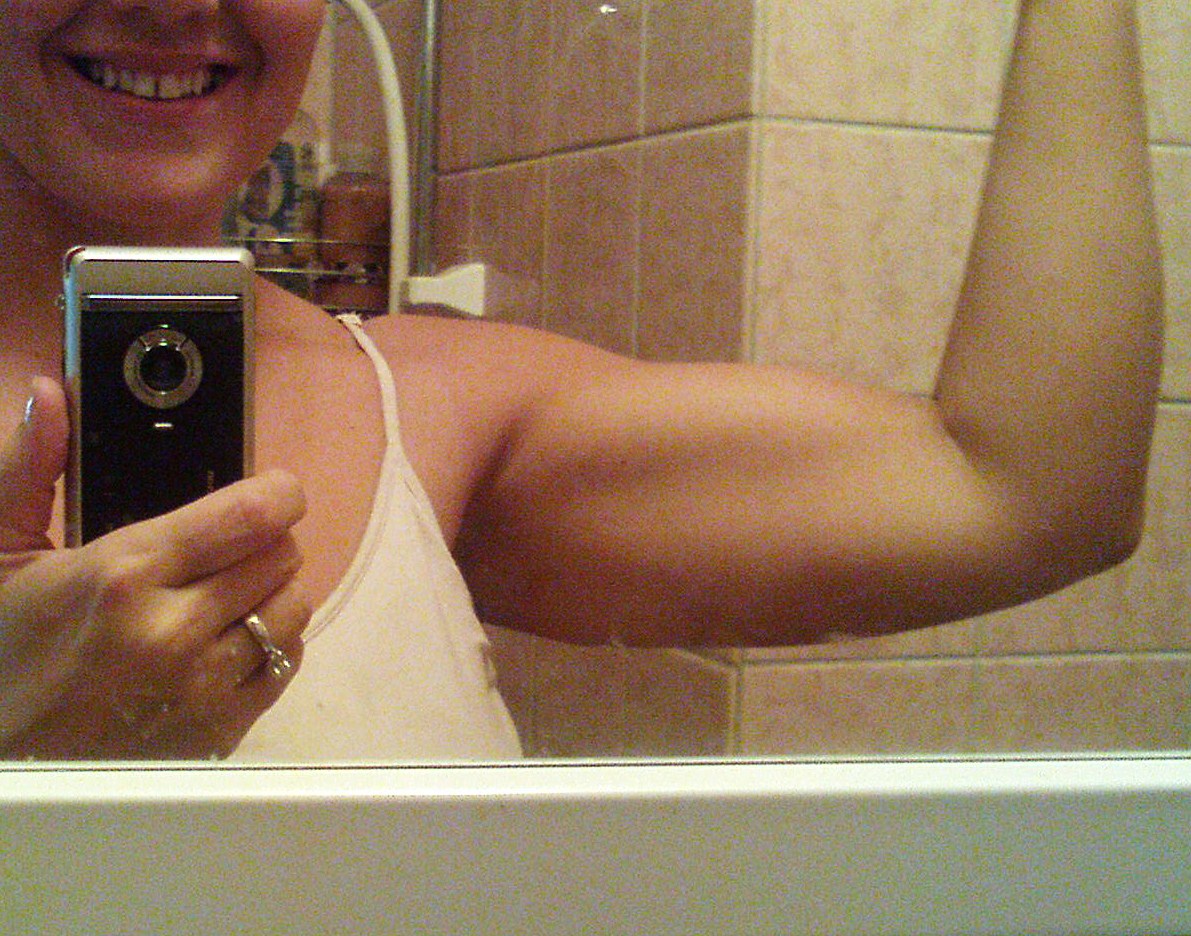
Here are my different upper arm forms:
I have decided I am going back to calorie counting for a little while, until my back injury is better and I can stack on the heavy weights once again and go crazy with the cardio.
Here are my different upper arm forms:
September 2009
October 2009
February 2010
I know photos can be deceptive, but the way it looks to me, it doesn't seem like a huge form improvement. Well, I have decided I am going back to what I know best, which is the pure math of calories in-calories out calculations plus a burn of at least 500kcal 6 times a week. Will be posting weekly form pictures.
It all begins tomorrow... Can't wait to put some proper structure back into my life. Once again: "If you fail to plan, you plan to fail."
Friday, 12 February 2010
CARDIO, CARDIO
Cardio obsession seems to be a habit strictly allowed for those doing a show in three months or for those who have a deadline to reach a certain weight. Otherwise, yes you are crazy if you do more than the norm of 45 minutes a day 5 times a week.
It’s seen as compulsive if you are as serious with your cardio regimen as with your weight training because “who the heck goes to the gym to do cardio twice a day all year long?”
But, if you want to LOOK like you can step onstage any day…. You need to TRAIN like you are gonna step onstage any day….. And if you obtain a leanness a certain way you will need to keep doing that to keep that leanness. “Now you reached your goal so now you can relax and cut down the volume in half” they say but what if YOUR body does not see that new stimulus as stimulating enough? Are you supposed to cut back when you know that will tell your body to soften up again?
People lie about how much cardio they do. Trust me, ask any super lean fitness person and they will most likely claim they do a lot less than they do. Or if you meet these people at big events, nobody says they dieted for three months to be shredded for the booth work, no, they want you to believe they look like this all the time! Without any real issues with cardio or strict food guidelines!
I don’t know where that crap is coming from…. I have no problem standing up for me doing lots of cardio even though I don’t compete. It’s for ME. It’s because I do NOT want to be out of season because it’s season for my all the time. I don’t live by some competition agenda. I don’t need shows to stay disciplined. I don’t need deadlines. I just do, execute because it’s my way of doing it.
Is too much cardio unhealthy? Sure it is! It’s oxidative stress. It can lead to constant inflammation etc. But compare the extreme fitness lifestyle to whatever other lifestyle and you will see there are “healthy ways” and “super unhealthy” lifestyles.
If you’ve read my blog for a while you should see a pattern. I practice a lot of extreme practices, but I do it as healthily as I can while doing it. I’m not about being moderate or optimal. I’m about reaching my own personal goals in life. You don’t get there by doing things half-heartedly or with “moderation”. Moderation is for you who are happy with moderate results. I happen to be one of those who are not.
Pauline Nordin from Fighter Diet blog.
It’s seen as compulsive if you are as serious with your cardio regimen as with your weight training because “who the heck goes to the gym to do cardio twice a day all year long?”
But, if you want to LOOK like you can step onstage any day…. You need to TRAIN like you are gonna step onstage any day….. And if you obtain a leanness a certain way you will need to keep doing that to keep that leanness. “Now you reached your goal so now you can relax and cut down the volume in half” they say but what if YOUR body does not see that new stimulus as stimulating enough? Are you supposed to cut back when you know that will tell your body to soften up again?
People lie about how much cardio they do. Trust me, ask any super lean fitness person and they will most likely claim they do a lot less than they do. Or if you meet these people at big events, nobody says they dieted for three months to be shredded for the booth work, no, they want you to believe they look like this all the time! Without any real issues with cardio or strict food guidelines!
I don’t know where that crap is coming from…. I have no problem standing up for me doing lots of cardio even though I don’t compete. It’s for ME. It’s because I do NOT want to be out of season because it’s season for my all the time. I don’t live by some competition agenda. I don’t need shows to stay disciplined. I don’t need deadlines. I just do, execute because it’s my way of doing it.
Is too much cardio unhealthy? Sure it is! It’s oxidative stress. It can lead to constant inflammation etc. But compare the extreme fitness lifestyle to whatever other lifestyle and you will see there are “healthy ways” and “super unhealthy” lifestyles.
If you’ve read my blog for a while you should see a pattern. I practice a lot of extreme practices, but I do it as healthily as I can while doing it. I’m not about being moderate or optimal. I’m about reaching my own personal goals in life. You don’t get there by doing things half-heartedly or with “moderation”. Moderation is for you who are happy with moderate results. I happen to be one of those who are not.
Pauline Nordin from Fighter Diet blog.
DRIFTING DAYS
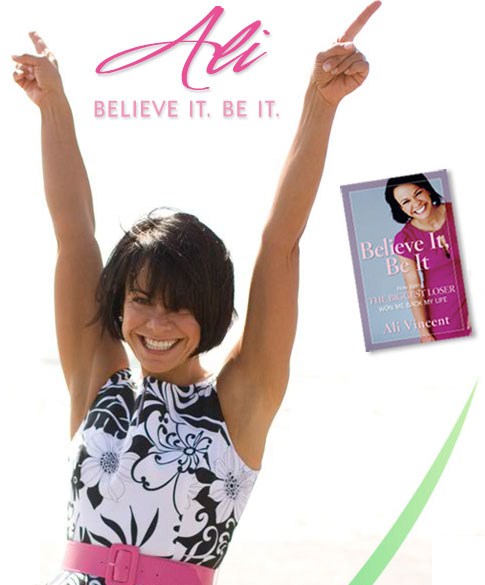
Ali Vincent and her newly released book.
Because of my back injury it's been hard to dig in and make life useful again. I swing between days of euphoria and high energy, to days of darkness and pain. To me, its all about control. And when I can't control a situation, I try my best to at least control my response to the situation. But sometimes, it's a curve ball and it hits you in the face instead of being able to catch it like you planned. That throws me off and I'm left with a situation that frustrates me.
This weekend I plan to take good care of myself. I need this back injury to heal properly. It's dragging me down and clouding my mind in other areas of life. Taking too much space of my peripheral view. I have other things to accomplish in life. Or could it be that this accident is the little pebble that made me fall because I NEED to stop rushing through life and instead need to slow down to soak it all up and plan where I'm going? Stop running like a bull through a porselin shop? Perhaps. I suppose, it's for me to figure out...
Tuesday, 9 February 2010
TRUTH ABOUT PROTEIN
If you are what you eat, what does that make a vegan? A string-bean? Of course not - and renowned strength coach Robert dos Remedios, a vegan, is strong evidence to the contrary. But most men eat animal products. And we really do become what we eat. Our skin, bones, hair, and nails are composed mostly of protein. Plus, animal products fuel the muscle-growing process called protein synthesis. That's why Rocky chugged eggs before his a.m. runs. Since those days, nutrition scientists have done plenty of research. Read up before you chow down.
You Need More
Think big. Most adults would benefit from eating more than the recommended daily intake of 56 grams, says Donald Layman, Ph.D., a professor emeritus of nutrition at the University of Illinois. The benefit goes beyond muscles, he says: Protein dulls hunger and can help prevent obesity, diabetes, and heart disease.
How much do you need? Step on a scale and be honest with yourself about your workout regimen. According to Mark Tarnopolsky, M.D., Ph.D., who studies exercise and nutrition at McMaster University in Hamilton, Ontario, highly trained athletes thrive on 0.77 gram of daily protein per pound of body weight. That's 139 grams for a 180-pound man.
Men who work out 5 or more days a week for an hour or longer need 0.55 gram per pound. And men who work out 3 to 5 days a week for 45 minutes to an hour need 0.45 gram per pound. So a 180-pound guy who works out regularly needs about 80 grams of protein a day.
Now, if you're trying to lose weight, protein is still crucial. The fewer calories you consume, the more calories should come from protein, says Layman. You need to boost your protein intake to between 0.45 and 0.68 gram per pound to preserve calorie-burning muscle mass.
And no, that extra protein won't wreck your kidneys: "Taking in more than the recommended dose won't confer more benefit. It won't hurt you, but you'll just burn it off as extra energy," Dr. Tarnopolsky says.
It's Not All the Same
Many foods, including nuts and beans, can provide a good dose of protein. But the best sources are dairy products, eggs, meat, and fish, Layman says. (Lactose Free products have even higher ratio of protein contra carbs and are beneficial for Lactose intolerant people. - Fight4Fitness comment) Animal protein is complete - it contains the right proportions of the essential amino acids your body can't synthesize on its own.
It's possible to build complete protein from plant-based foods by combining legumes, nuts, and grains at one meal or over the course of a day. But you'll need to consume 20 to 25 percent more plant-based protein to reap the benefits that animal-derived sources provide, says Dr. Tarnopolsky.
So if protein can help keep weight off, is a chicken wing dipped in blue-cheese dressing a diet secret? Not quite: Total calories still count. Scale down your fat and carbohydrate intake to make room for lean protein: eggs, low-fat milk, yogurt, lean meat, and fish.
But remember, if you're struggling with your weight, fat itself is not the culprit; carbs are the likely problem. Fat will help keep you full, while carbs can put you on a blood-sugar roller coaster that leaves you hungry later.
Timing is Everything
"At any given moment, even at rest, your body is breaking down and building protein," says Jeffrey Volek, Ph.D., R.D., a nutrition and exercise researcher at the University of Connecticut. Every time you eat at least 30 grams of protein, Layman says, you trigger a burst of protein synthesis that lasts about 3 hours.
But think about it: When do you eat most of your protein? At dinner, right? That means you could be fueling muscle growth for only a few hours a day, and breaking down muscle the rest of the time, Layman says. Instead, you should spread out your protein intake.
Your body can process only so much protein in a single sitting. A recent study from the University of Texas found that consuming 90 grams of protein at one meal provides the same benefit as eating 30 grams. It's like a gas tank, says study author Douglas Paddon-Jones, Ph.D.: "There's only so much you can put in to maximize performance; the rest is spillover."
Eating protein at all three meals—plus snacking two or three times a day on proteins such as cheese, jerky, and milk—will help you eat less overall. People who start the day with a protein-rich breakfast consume 200 fewer calories a day than those who chow down on a carb-heavy breakfast, like a jam-smeared bagel. (Or a bowl of cereal. - Fight4Fitness comment) Ending the day with a steak dinner doesn't have the same appetite-quenching effect, Layman says.
Workouts Require Fuel
Every guy in the gym knows he should consume some protein after a workout. But how much, and when? "When you work out, your muscles are primed to respond to protein," Volek says, "and you have a window of opportunity to promote muscle growth."
Volek recommends splitting your dose of protein, eating half 30 minutes before the workout and the other half 30 minutes after. A total of 10 to 20 grams of protein is ideal, he says. And wrap a piece of bread around that turkey, because carbs can raise insulin; this slows protein breakdown, which speeds muscle growth after your workout. (A quality protein powder with good composition will produce the same benefits. - Fight4Fitness comment) Moreover, you won't use your stored protein for energy; you'll rely instead on the carbs to replenish you.
You're doing this because resistance exercise breaks down muscle. This requires a fresh infusion of amino acids to repair and build it. "If you're lifting weights and you don't consume protein, it's almost counterproductive," says Volek. Protein also helps build enzymes that allow your body to adapt to endurance sports like running and biking.
Powders are for Everyone
Everyone - not just muscleheads - can benefit from the quick hit of amino acids provided by a protein supplement, bar, or shake. Your best bet is a fast-absorbing, high-quality kind like whey protein powder (derived from milk): "It appears in your bloodstream 15 minutes after you consume it," Volek says.
Whey protein is also the best source of leucine, an amino acid that behaves more like a hormone in your body: "It's more than a building block of protein - it actually activates protein synthesis," Volek says. Whey contains 10 percent leucine while other animal-based proteins have as little as 5 percent.
Casein, another milk protein sold in supplement form, provides a slower-absorbing but more sustained source of amino acids, making it a great choice for a snack before you hit the sack. "Casein should help you maintain a positive protein balance during the night," says Volek. Building muscle while you sleep? Thanks to protein, anything's possible.
Article from Men's Health.

You Need More
Think big. Most adults would benefit from eating more than the recommended daily intake of 56 grams, says Donald Layman, Ph.D., a professor emeritus of nutrition at the University of Illinois. The benefit goes beyond muscles, he says: Protein dulls hunger and can help prevent obesity, diabetes, and heart disease.
How much do you need? Step on a scale and be honest with yourself about your workout regimen. According to Mark Tarnopolsky, M.D., Ph.D., who studies exercise and nutrition at McMaster University in Hamilton, Ontario, highly trained athletes thrive on 0.77 gram of daily protein per pound of body weight. That's 139 grams for a 180-pound man.
Men who work out 5 or more days a week for an hour or longer need 0.55 gram per pound. And men who work out 3 to 5 days a week for 45 minutes to an hour need 0.45 gram per pound. So a 180-pound guy who works out regularly needs about 80 grams of protein a day.
Now, if you're trying to lose weight, protein is still crucial. The fewer calories you consume, the more calories should come from protein, says Layman. You need to boost your protein intake to between 0.45 and 0.68 gram per pound to preserve calorie-burning muscle mass.
And no, that extra protein won't wreck your kidneys: "Taking in more than the recommended dose won't confer more benefit. It won't hurt you, but you'll just burn it off as extra energy," Dr. Tarnopolsky says.
It's Not All the Same
Many foods, including nuts and beans, can provide a good dose of protein. But the best sources are dairy products, eggs, meat, and fish, Layman says. (Lactose Free products have even higher ratio of protein contra carbs and are beneficial for Lactose intolerant people. - Fight4Fitness comment) Animal protein is complete - it contains the right proportions of the essential amino acids your body can't synthesize on its own.
It's possible to build complete protein from plant-based foods by combining legumes, nuts, and grains at one meal or over the course of a day. But you'll need to consume 20 to 25 percent more plant-based protein to reap the benefits that animal-derived sources provide, says Dr. Tarnopolsky.
So if protein can help keep weight off, is a chicken wing dipped in blue-cheese dressing a diet secret? Not quite: Total calories still count. Scale down your fat and carbohydrate intake to make room for lean protein: eggs, low-fat milk, yogurt, lean meat, and fish.
But remember, if you're struggling with your weight, fat itself is not the culprit; carbs are the likely problem. Fat will help keep you full, while carbs can put you on a blood-sugar roller coaster that leaves you hungry later.
Timing is Everything
"At any given moment, even at rest, your body is breaking down and building protein," says Jeffrey Volek, Ph.D., R.D., a nutrition and exercise researcher at the University of Connecticut. Every time you eat at least 30 grams of protein, Layman says, you trigger a burst of protein synthesis that lasts about 3 hours.
But think about it: When do you eat most of your protein? At dinner, right? That means you could be fueling muscle growth for only a few hours a day, and breaking down muscle the rest of the time, Layman says. Instead, you should spread out your protein intake.
Your body can process only so much protein in a single sitting. A recent study from the University of Texas found that consuming 90 grams of protein at one meal provides the same benefit as eating 30 grams. It's like a gas tank, says study author Douglas Paddon-Jones, Ph.D.: "There's only so much you can put in to maximize performance; the rest is spillover."
Eating protein at all three meals—plus snacking two or three times a day on proteins such as cheese, jerky, and milk—will help you eat less overall. People who start the day with a protein-rich breakfast consume 200 fewer calories a day than those who chow down on a carb-heavy breakfast, like a jam-smeared bagel. (Or a bowl of cereal. - Fight4Fitness comment) Ending the day with a steak dinner doesn't have the same appetite-quenching effect, Layman says.
Workouts Require Fuel
Every guy in the gym knows he should consume some protein after a workout. But how much, and when? "When you work out, your muscles are primed to respond to protein," Volek says, "and you have a window of opportunity to promote muscle growth."
Volek recommends splitting your dose of protein, eating half 30 minutes before the workout and the other half 30 minutes after. A total of 10 to 20 grams of protein is ideal, he says. And wrap a piece of bread around that turkey, because carbs can raise insulin; this slows protein breakdown, which speeds muscle growth after your workout. (A quality protein powder with good composition will produce the same benefits. - Fight4Fitness comment) Moreover, you won't use your stored protein for energy; you'll rely instead on the carbs to replenish you.
You're doing this because resistance exercise breaks down muscle. This requires a fresh infusion of amino acids to repair and build it. "If you're lifting weights and you don't consume protein, it's almost counterproductive," says Volek. Protein also helps build enzymes that allow your body to adapt to endurance sports like running and biking.
Powders are for Everyone
Everyone - not just muscleheads - can benefit from the quick hit of amino acids provided by a protein supplement, bar, or shake. Your best bet is a fast-absorbing, high-quality kind like whey protein powder (derived from milk): "It appears in your bloodstream 15 minutes after you consume it," Volek says.
Whey protein is also the best source of leucine, an amino acid that behaves more like a hormone in your body: "It's more than a building block of protein - it actually activates protein synthesis," Volek says. Whey contains 10 percent leucine while other animal-based proteins have as little as 5 percent.
Casein, another milk protein sold in supplement form, provides a slower-absorbing but more sustained source of amino acids, making it a great choice for a snack before you hit the sack. "Casein should help you maintain a positive protein balance during the night," says Volek. Building muscle while you sleep? Thanks to protein, anything's possible.
Article from Men's Health.
MIX PLATTER LIFE
The role discussed today had a bit of everything, just the way I like it. Like my music - a bit of mozart, rap and rock. Or like my workouts - a bit of martial art, bodybuilding and salsa. And like my food... I love the taco nights, the tapas bar, the buffés, the mix platters... a little bit of everyhting. That's my kind of way. That's my kind of life!
Sunday, 7 February 2010
GET BACK ON COURSE
One of my motivational pictures and sources.
Visualise what you want every day using little things. That little dress or those `perfect' jeans that don't fit — buy them or pull them out of the closet and try them on every time you don't want to work out or you want to eat ice cream. Write a list of things why you want to look good, stay healthy or keep fit and post them on the fridge. Maybe print out a picture of someone you admire and put it up where you need to think twice about that cookie or sweet. Whatever works, or try them all!
People don't realize that little goals are what is going to get you to the finish line in the end. People make these huge resolutions, but don't decide on the way they are going to accomplish them. It is very difficult to wake up at 5 o'clock in the morning to squeeze your workout in for the day. I would think that you just need to get on a consistent schedule where working out is something you do, just like going to work. Just find a time each day that works the best for you. Plan it. Organise it. Just do it!
Don't let yourself get stuck before you barely even start. Get motivated again — and get moving! You won't regret it when the pounds come off and the results of your hard work pay off.
Don't let broken New Year's resolutions get you down. It's time to think of a more effective way to achieve your goals. If you promised yourself you'll only eat three meals and a snack every day, that's a reasonable goal. If you promised yourself you'll never eat pizza again, that's setting yourself up for inevitable failure. Think about the big picture, but work toward smaller goals. Soon, those resolutions will be a thing of the past — because you've already completed them!
Friday, 5 February 2010
EXTREME TREADMILL WORKOUT
For all you health and fitness freaks out there who think the treadmill is getting boring, here is an awesome way to spruce up your workouts. A bit more extreme than your regular treamill workout, but hey, if you want to try something new and be innovative at the gym, check this out!
Thursday, 4 February 2010
QUALITY OVER QUANTITY
Do you rush through your sets? Ever swing your weights? If so, you're using incorrect form — and not only are you lessening your workout's effectiveness but you could potentially be causing your body harm. To get the most out of your workouts, you've got to use proper form. How well you lift is way more important than how much you lift. Much rather do your reps with lighter weights and better form than heavier weights with poor form. Note, we women can handle much more than what we think we do, so don't wimp out either.
So what constitutes proper form and technique? Precision, concentration, control, and breathing.
So, think PCCB when you hit the weights at the gym... or join one of my BodyPump classes! ;))
So what constitutes proper form and technique? Precision, concentration, control, and breathing.
- Precision - Use lighter weights when trying an exercise for the first time, and go through the motions slowly. Once you understand how the exercise is performed and commit the movement to muscle memory, then you can progress to heavier weights and faster completion.
- Concentration - To achieve maximum results, you must focus on the specific muscles you are training, really feel the work you are doing, and make every rep count.
- Control - From the beginning of the exercise to the end, you must perform the movements in a deliberate, steady manner. As well as increasing your flexibility, this will ensure that you are stimulating the entire muscle, not just a portion of it.
- Breathing - It's very important to breathe properly during each repetition that you complete. When you are exercising, as a general rule, exhale during the lift, and inhale as you lower the weights.
So, think PCCB when you hit the weights at the gym... or join one of my BodyPump classes! ;))
Tuesday, 2 February 2010
RETURN FROM BACK INJURY
Returning from a back injury is never easy, after all, you never planned to injure yourself in the first place. It's very important you get some rest, but even more important is to introduce light exercise, such as walks, into the schedule as soon as you can muster, as this will help the injury to heal quicker.
For me, pain killers are often not to prefer. I like to know if I'm still in pain and where it hurts. However, when you're in serious pain, it's hard to stand firm on that belief. Today was the first day without any pain relief pills and I must say I have been in a bit of agony. The pain has been shooting unexpectedly and randomly, which really caught me off guard all day. But I'm a stubborn person and my slow walks with Murphy is a highlight of the day. It's harder to sit down though as my back injury sits around the tail bone and lower back.
Returning to school tomorrow and the mundane task of sitting in front of the computer. Oh yes, the pain killers are coming with me! I am aiming to get back to my BodyPump and BodyCombat classes on Friday already. I can't hold off anymore. My body is NOT liking this unactive lifestyle I've had to adapt lately. And neither do I!
Subscribe to:
Posts (Atom)