Friday, 29 July 2011

LOW-CARB HEALTHY PIZZA

Is there such a thing you wonder? Well, let me tell you, there is. Now, a healthy, low-carb pizza will never be the doughy, high-fat consistency of a regular pizza, so don't kid yourself, but there are ways to make a pizza that can suffice for a decent low-caloric meal. Load it up with all kinds of veg and if you can find fat-free cheese, go for it! :)

Here's how I made mine:
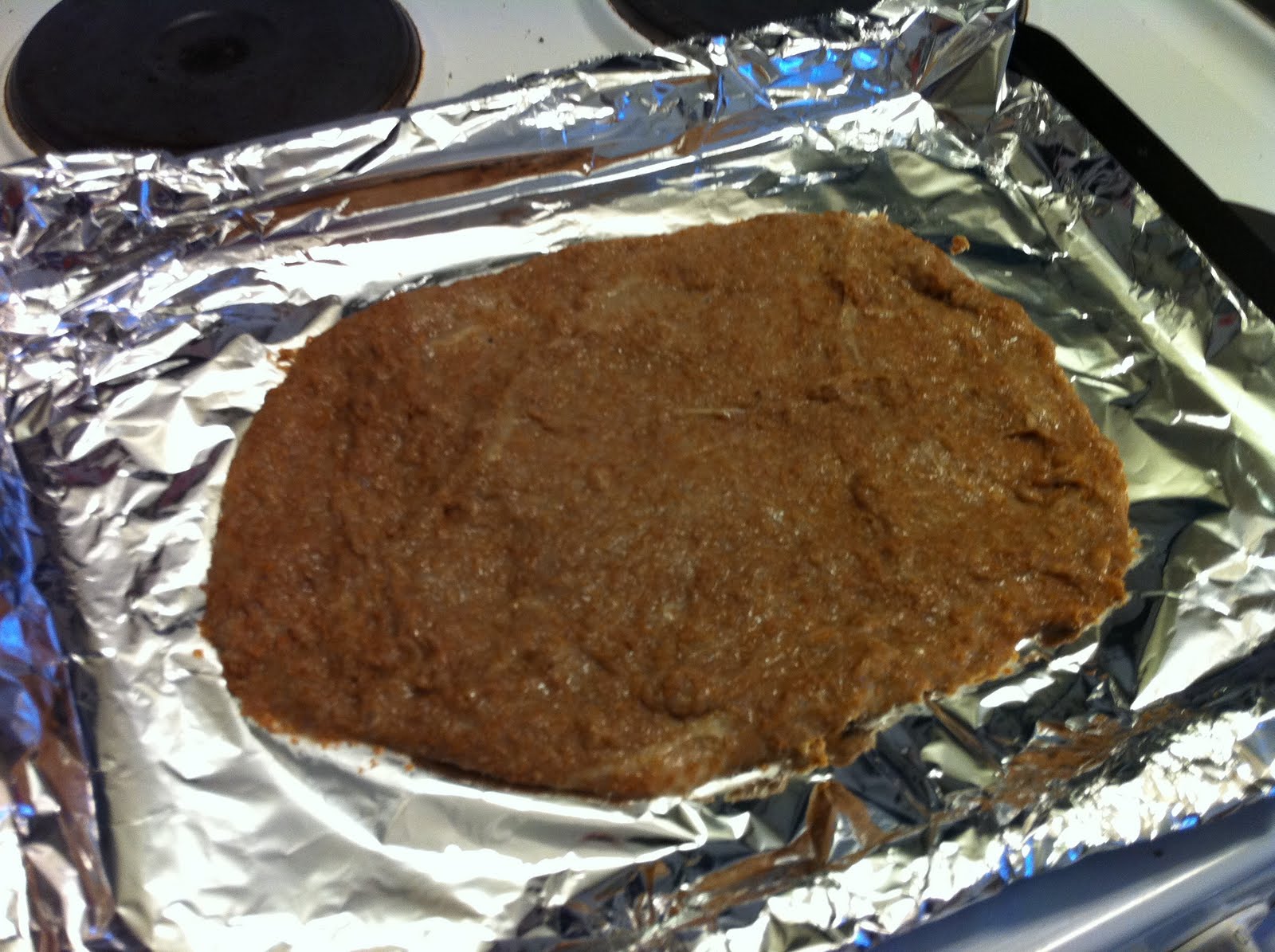
I mixed 1 sachet of dry yeast with 2dl of wheat bran and some psyllium husks, about 1/2 dl, and a tiny bit of salt with lukewarm water. The consistency should be about half watery, wanting to get doughy. Stick it in the microwave in a glass bowl for about 7 minutes. In the meantime, turn the oven on 200 degrees. Stir it up, and believe me it will look very suspicious. I oiled an oven pan with olive oil and poured the "dough" onto the pan, flattening it out with a spoon. I stuck it in the oven for about 20 minutes. When it looks like it's kind of drying out a bit and getting more crusty than doughy, take it out and stick your toppings on. I prefer some crushed tomatoes I reduced and drained the water from, some low-salt and low-sugar tomato ketchup, loads of oregano, black pepper and garlic powder on both bottom and top, green pepper, onion, halved cherry tomatoes, mushrooms and some low-fat ham. YUMMY! In the oven for an additional 20 minutes. Let it rest for a bit before you tuck in. Now, remember, the dough will be much softer and squishier than the regular piza dough you would be used to, but it's pretty good for not racking up a bunch of calories.

Now, last night, it dawned on me how I can make the dough even better. So I will try that next time! :)
Enjoy!

First batch!

First batch toppings.

First batch done and lamost eaten in the back.
Second batch in the front, dough cooked, ready to go in the oven with toppings.

Second batch finished and tested. Much better than first one! :)

Thursday, 14 July 2011

RISE PHOENIX, RISE

So much I would like to write about but it almost seems like there's some sort of block in my head. It won't come out in proper sentences and it all sounds like jibberish in my head. Even this sounds weird to me. What has happened to my beloved words? My love for words?

I must admit I am in a phase now when I feel unmotivated and not really up for much. I have made a huge turnaround in my life. I am looking for a job and it's not going the way I expected it to go. Dear friends keep telling me "have faith", "stop being so hard on yourself", "everything will be fine, it will work itself out". Deep down inside I know that's the truth, but when doubt anchors itself in your soul, it's hard to rip it out again.

I have been listening to encouraging words from speakers and motivators, and yes, I hear them, but it's like my mind is in a daze. I have lost myself. Where is my passion? Where is my strength to bounce back?

Maybe some days we just need to let it be. Need to let the depth of all despair be our nest for a few days, then rise up like Phoenix from the ashes and start anew. Bigger, brighter, bolder with a new fire in our belly.

Yes, that's what I'll do!

Sunday, 5 June 2011

LATEST RESEARCH ON STRETCHING

I have been saying for years now that static stretching before exercise isn't as good as we have previously thought. After a hard workout though, I feel there is nothing better than a stretch. Read this interesting article and see how you feel about stretching in general.

Latest research into stretching

There’s increasing evidence that stretching before exercise doesn’t improve performance or reduce injury risk

There’s increasing evidence that stretching before exercise doesn’t improve performance or reduce injury risk. And the most comprehensive review of its kind concluded that flexibility training has no known health benefits(1). Gary O’Donovan presents the evidence to help you decide if stretching is a waste of time.

I recently searched an electronic database for studies about static stretching, ballistic stretching and dynamic stretching (www.pubmed.com). In these studies, torque, 1-repetition maximum (using free weights), maximal voluntary contraction (on a machine), jump height and sprint time were the most common measures of strength and power. Unfortunately, many of the studies included a small number of participants (and had little chance of detecting differences in performance) and some used dodgy statistics(2).


Static stretching

Static stretching involves passive elongation of a muscle or group of muscles(3). I found 61 studies investigating the acute effects of static stretching on strength and power and the conclusions on performance were as follows:

•One study found an improvement in performance(4);

•Thirty-eight studies found reductions in performance(5-42);

•Twenty-two studies found no statistically significant differences in performance between stretching and non-stretching groups(43-64).

Two 15-second stretches or three 30-second stretches were sufficient to reduce performance and more demanding protocols reduced performance for 60-120 minutes following stretching(22,31). Several studies also found that static stretching reduced the elasticity and electrical activity of muscles (see figure 1 and box 1).

It’s unclear if a second warm up can reduce the detrimental effects of static stretching on strength and power(13,65) but what’s undeniable is that the available evidence suggests that static stretching is a waste of time or, worse, is detrimental to performance!


Ballistic stretching


Ballistic stretching involves swinging, bouncing or bobbing movements and the final position is not held (3). I found six studies about the acute effects of ballistic stretching on strength and power: there were no reports of improved performance, one report of decreased performance (62) and five inconclusive reports (10, 38, 40, 56, 63). There were only 14 to 24 participants in each study and elasticity and electrical activity were not assessed. Thus, there is insufficient evidence to recommend ballistic stretching before exercise.


Dynamic stretching

Ballistic stretching and dynamic stretching are given the same definition in the latest American College of Sports Medicine manual(3); however, the prevailing definition of dynamic stretching in the UK is ‘flexibility in action’ and dynamic stretches include ankle flicks, buttock flicks, knee lifts, the ‘Russian walk’, the ‘walking lunge’ and the ‘walking hamstring’(66).

I found 10 studies about the acute effects of dynamic stretching on strength and power: six of these studies found improvements in performance(7,17,54,55,63,64), no studies found decrements in performance and three studies found no statistically significant differences in performance between stretching and non-stretching groups(45,47,49).


One study concluded that dynamic stretching was beneficial, but the authors compared changes in performance in the dynamic stretching and static stretching groups instead of the dynamic stretching and non-stretching groups(25). The available evidence suggests that dynamic stretching is beneficial; however, warming up probably improves performance and it is impossible to distinguish the effects of warming up and stretching in many dynamic stretches.


Stretching and endurance performance


The effects of stretching before exercise and flexibility training on endurance performance are not well documented. Static stretching did not significantly reduce endurance performance in a study of 11 physically active students(67), but it did reduce running economy and endurance performance in a study of 10 trained distance runners(68). US scientists found that a stretching programme did not reduce running economy, but the intervention only lasted 10 weeks(69). Cross-sectional studies can reflect years of exposure to stretching and a study of 34 international-standard distance runners found that the least flexible runners were also the most economical(70).

Stretching after exercise


Although no longer recommended before exercise, static stretching is still recommended during the cool-down(3). The advantages of stretching after exercise might include an increase in range of movement and a decrease in the risk of lower limb injury in those with tight muscles(78,84). The disadvantages of stretching after exercise might include a decrease in running economy(70) and an increase in the risk of lower limb injury in those with loose muscles(78).


Some people say that stretching increases their sense of wellbeing and some also stretch to reduce muscle soreness(82), but there is little evidence that stretching reduces soreness in the days after novel or unusually demanding exercise(85,86). Given limited and conflicting evidence, athletes and coaches should consider if any advantages are likely to be greater than any disadvantages before stretching after exercise.


Summary and conclusions


Large, robust RCTs help ensure that the healthcare budget is spent on interventions that actually work. Anecdotal evidence and testimonials are worthless. The existing evidence suggests that flexibility training has no known health benefits(1); however, ongoing trials may improve our understanding of the effects of stretching and yoga on back pain(87,88). In the meantime, the practical implications box, right, provides some recommendations on stretching for athletes seeking maximum performance.


Article taken from pponline.co.uk. Find full article and references here.
I'M BACK!

I've been away from writing for a while. Have had to concentrate on my life and all the changes its brought on its way. Have missed blogging and looking forward to doing it again. Have missed all of you who used to read my blog as well. Hope to give you some useful and interesting writing again.
Well met again my friends! :)

Thursday, 30 September 2010

TODAYS' NEWS: PETTY THIEF GETS ATTACKED BY RAGING SWEDISH GIRL

I got robbed today! Yes, proper, for real robbed. You know, thief sneaking his hand into my bag taking my wallet scenario, but that's not the end of the story...

I'm still a bit shaken by the incidence that occurred today. I was browsing some socks in a store, engrossed in my own world of stripes, colours or dots. All of a sudden I felt a tug on my handbag, like someone had walked into me from the side and accidentally gotten something caught in my bag. I turned around and saw a small man in his mid 30's standing behind me, looking dumbstruck at me. Actually, he looked very surprised. So I looked down at my bag as a precaution and saw it had been opened. Me being absolutely meticulous with checking my handbag is safe and seeing this suspicious man behind me, standing awfully near to me, I connected the dots and realised what had happened. And I couldn't believe it. So I said in a very as-a-matter-of-a-fact voice:
"You just took my wallet!"
He looked so shocked and perplexed at me, like I had just caught him doing something red-handed, which I had. I quickly looked down at his hand furthest away from me and there it was, my beautiful, faux-crocodile, deep vine coloured wallet... clenched in his hand. I reached down and snatched it back from him, now clutching it hard in my own hand. I stared at him angrily and then said boomingly so everyone in the store could hear:
"He just took my wallet!"
The thief's eyes widened as I raised my voice again:
"I can't believe it. He just took my wallet!"
Obviously I must've been in shock, otherwise I wouldn't be stating the fact over and over, but it was true. I couldn't believe it. I had been roobed. The cheek of him to rob me. ME!
He started backing away as I attacked him loudly with my words once again while walking towards him:
"You just took my wallet!"
At this point he panicked, threw the clothes he held in his arms and legged it out the door, with me, the angry customer behind him shouting:
"Stop him. Stop him!"

And so it goes... he vanished onto the busy street. I turned around, walked back into the store and started shaking. Adrenalin hit me full force! I was shocked. And in disbelief. And then angry. I wanted to strangle the thief. And had he given me resistance to give my wallet back, I think I would've kickboxed the pulp out of him. But I'm fine. I have my wallet back and I have a story to tell as well as be extra thankful for life today.

Could be interesting if I see him again though... I'll keep you posted.
But for now, TOODLES!

Wednesday, 15 September 2010

TRUTHS AND FALSEHOODS ABOUT FAT LOSS

Before Embarking On a Fat Loss Programme You Should Read This:

Daily energy expenditure consists of 3 components:

1. Resting metabolic rate (energy required for basic living) total of 60-70%

2. Diet induced Thermogenesis (energy required to breakdown food) 10% of total

3. Energy cost of physical activity 20-30% of the total.


Question:
If we create a caloric deficit of “X” amount – we will lose “Y” amount of fat? (i.e. the calorie deficit = fat loss, a 3500 calorie deficit = 1 pound)
True or False?

False!

In a study of meal frequency, it has been show that a group eating 6 meals per day lost more fat than a group eating 2 meals a day, despite the calories being equal. The study showed that adults who were accustomed to eating 4 meals per day switched to 3 meals a day actually gained body fat and weight despite the calories remaining the same.


Question:
A calorie is a calorie. With the same meal frequency, as long as we adjust the “calories in v. the calories out” we will see the same fat loss; that is proteins, carbohydrates and fat (macronutrients) do not really matter.
True or False?

False!

At the same calorie intake a low carbohydrate diet resulted in significantly greater fat loss than a low fat diet.

Summary:
Low carbohydrate, high protein diets favourably affect mass and composition independent of energy intake


So what Should We Be Doing?

• Increase meal frequency

• Eat meals at regular times

• Lower carbohydrate intake/increase protein

• Moderately reduce calories.


Question:
The addition of aerobic (jogging/gentle running) exercise to a caloric deficit (through diet) will increase calories burned and therefore increase fat lost.
True or False?

False!

In a 6 month study of 2 groups: 1 on diet only and 1 on diet plus aerobic exercise (50 minutes 5 days per week) There was No additional effect of aerobic exercise on body composition that is to say, adding aerobic exercise had no effect over dieting alone.


Question:
If diet (total caloric and macronutrient intake) is a constant, then the more calories you burn during training, the more fat you will lose.
True or False?

False!

A group was divided into 2 smaller groups:

• Group 1 exercised for 15 weeks doing 20 minutes of interval training per session 3 times per week

• Group 2 did 15 weeks of 40 minutes steady state aerobic (jogging) exercise per session 3 times per week

• Both groups burned the same calories over the 15 weeks and ate the same diet.

• The steady state group actually gained on average 1lb of fat.

• The interval training group lost 5.5lb of fat and increased lean mass.

• The interval group also increased aerobic capacity more than the steady state group.


So NOW What Should We Be Doing?

• Increase meal frequency.

• Reduced carbohydrate diet

• Interval training – this should only become part of your training programme once you have developed a foundation of steady state running.

• Resistance training – introduce a controlled well planned weight training programme.


Taken from Running4Women.

Check out The Truths and Falsehoods About Fat Loss

Take a look at: The Truths and Falsehoods About Fat Loss 

Saturday, 11 September 2010

HAPPY & FIT HAMPSTEAD HEATH

Hampstead Heath map

Woke up this morning feeling a strong urge to go out for a run. I usually plan my workouts and BodyCombat was on the schedule for today, but when a sudden urge for an unplanned workout hits me, I smile and embrace the extra fitness benefit.

With Murphy trotting beside me, I ran into Hampstead Heath, one of the most beautiful and versatile parks I've ever experienced. It's also a huge pool of motivation as people run, do exercises, boot camps, PT and other training day and night. I love the buzz! I love the dedication!

After the run and a few hill intervals, I found a spot in the grass where I could go mad doing my BodyCombat. It's an exhilirating feeling being outside in the free, with my beloved dog roaming around me, while I'm punching and kicking my way through the choreography. I felt so strong. So focused. So energised. And best of all, so happy!

Hope you're ALL having as good of a Saturday as I'm having. Toodles! =))

Tuesday, 7 September 2010

BEING GRATEFUL

Begin your day by feeling grateful. Be grateful for the bed you just slept in, the roof over your head, the carpet or floor under your feet, the running water, the soap, your shower, your toothbrush, your clothes, your shoes, the refrigerator that keeps your food cold, the car that you drive, your job, your friends. Be grateful for the stores that make it so easy to buy the things you need, the restaurants, the utilities, services, and electrical appliances that make your life effortless. Be grateful for the magazines and the books that you read. Be grateful for the chair that you sit on, and the pavement that you walk on. Be grateful for the weather, the sun, the sky, the birds, the trees, the grass, the rain, and the flowers.

Thank you, thank you, thank you!


From the Secret Scrolls

Monday, 6 September 2010

SUNDAY FUN

A few days have passed and I am still tired from the trip. The whole house is sick with the cold and I am trying desperately not to catch it.

Had a good day yesterday watching the Kilkenny vs. Tipperary in Irish Hurling, and as always where there are Irish people in the pub, it's bound to be good fun.

Might have gotten a great extra gig as a Swedish translator. Not too bad to have a job like that on the side. Doing the Freelance test right now and hope I will be accepted. Keep your fingers crossed from me!

Watching the Kilkenny vs. Tipperary game in Irish Hurling.

After match entertainment - Good singer with unknown side kick dancing and playing on the tables. Haha!

Enjoying the delicious cider Bulmers. Yum!

Friday, 3 September 2010

24 HOURS TORTURE

Wow, what a trip. Left Sweden around noon yesterday and several hours later I am thrown back into London and its hussle and bussle. The journey was a torture to say the least. Never seen so many road works, bad drivers and poor road directions. In Germany it all of a sudden came to a complete stand still and no car or truck was moving. We covered about 300 metres in 3 hours. Didn't do much advantage to making it to our ferry from Calais to Dover and we ended up missing it with just 3 hours. Hmm, wonder why?! Gas leak. Baah, bad excuse...

But now I'm here. London! Love the vibe. Hate the arrogance. And I got here in 25 hours with less than 2 hours sleep, a fully packed Saab, a dedicated doggie and the love of my life. Let a new chapter begin. :)

Stand still on the motorway for 3 hours...

Trying to keep the attitude happy and cheerful, as always. :)

The white cliffs of Dover.

Tired and pale, but thankful the trip's almost completed.

Entering the City Centre of London via Tower Bridge.

Sunday, 22 August 2010

HIIT AND PLYOMETRICS WORKOUT

My new workout passion is definitely bodyweighted HIIT (High Intensity Interval Training) and Plyometrics. It's amazing how empowered and weak you can feel at the same time, all during the same workout. I've been changing up my gym routine a lot lately and do exercises like scorpion plyo push-ups, knee tuck jumps, loads of jump squats and lunges, full body exercises incorporating cardio, and I've really seen a difference in my muscle structure. What's so good about them is that you can take it anywhere. There are always benches outside, or rocks to jump on, stairs, playgrounds, etc. But they're definitely not easy exercises to do when the goal is to burn as much fat as possible, which means the intensity is through the roof! And you know what? I absolutely LOVE it. Yeah, I feel weak when my body is screaming for me to stop pushing it, but once you do that little bit extra, that you didn't think you would be able to do, the endorphins and adrenaline shoots up and I want to go again. Which is good, coz after all I'm doing hardcore circuit training. Haha!

If you don't know much about plyometrics and HIIT, here are some videos you can check out to get an idea of circuits you can do for yourself:

UFC Plyometrics workout


HIIT and Plyometrics outside the gym

Wednesday, 18 August 2010

HEALTHY BANANA ICE CREAM

This recipe is just amazing! Healthy, delicious and only consisting of 2 ingredients. Is this possible you ask? Of course it is. And you will love it. I got the recipe from Rachel Ray show and this is how you do it.

Slice ripe bananas and freeze them. (Calculate about one banana per person, depending on how greedy they are... hehe.) Take the frozen bananas and put them in a blender or food processor, pour some milk into the container (depending on how many bananas, I used about 50-100ml semi-skimmed milk for 2 bananas). Whizz/mix/blend it until the bananas have been disolved into the mixture (about 1 min) and there you go... your own soft Whippy style ice-cream.
DEEEE-LISH!

Tuesday, 17 August 2010

HORMONES & NUTRIENTS: ZINC

I'm sure you haven't been able to surpass all the hallabalooza about the issues on hormones and why it damages our health. How the food industry pump our poor cows, chickens and pigs full of hormones and antibiotic just to make extra profit. This later finds its way to our plates, or glass of milk, and into our bodies to disrupt the fine mechanism we already have inside of us. Due to changes in farming methods and the sad state of our soil, even our whole foods is not nearly as nutritious as it once was. Beside making sure that we eat proper food (as we say: if it had a mother or came from the ground, it's ok.), we can also make sure to eat foods that help our bodies to stay balanced, although it gets rocked by our environment. And whenever you can, go organic.

I do believe in supplementation, especially if you're on a diet and working out as much as I do, but I also believe you should do your best to help your body cope with all the outside toxicity that finds itself into our cells. My first nutrient I like to keep tabs on is:

ZINC
Zinc is one of the most important minerals used by the body for various functions such as maintaining a sense of smell, keeping a healthy immune system, building proteins, triggering enzymes, and creating DNA. Zinc also helps the cells in your body communicate by functioning as a neurotransmitter. A deficiency in zinc can lead to stunted growth in children, depression, impotence, hair loss, eye and skin lesions, impaired appetite, and lower immunity defense. Zinc levels tend to be lower in older people, anorexics, alcoholics, people on diets, children with ADHD and diabetics. Zinc levels are related to leptin, the hormone that helps us feel satisfied. Studies also suggest that restoring deficiencies of zinc, helps people increase lean body mass while maintaining or losing weight.

Recommended daily dose is 15 mg. You can find high levels of zinc in oysters, lobsters, crab, wheat germ, liver, dark meats, cocoa powder, baked beans, peanuts, pumpkin and squash seeds.

Friday, 13 August 2010

Tips for Controlling Your Appetite


If you suffer from constant food cravings, there are some steps you can take to remedy the situation. The first step is to make sure you're eating correctly for your metabolic type. (You can find out how by taking the "What to Eat" quiz on my site!) This will help a lot. If you're certain that you are eating as you should for your metabolic type and you still feel hungry all the time, consider these tips to curb your appetite:

Don't skip meals. You should be eating three square meals a day, plus one snack, and spacing your meals throughout the day so that you don't go longer than four hours without eating. This will keep your blood sugar levels and hunger hormones stable.


Drink tons of water. When you feel as if you're starving, pour yourself a huge glass of water or grab a bottle of seltzer — it will help quell the urge to snack.


Sleep! Two hormones, leptin and ghrelin, regulate our appetite, and both are directly affected by how much sleep we get. These hormones work in a kind of "checks and balances" system to control feelings of hunger and fullness. Getting eight hours of shut-eye each night helps the hormones work properly, which in turn will help curb your appetite.


Examine your hunger. The next time you feel hungry between meals, consider the last time you ate. If it was less than three to four hours earlier, your stomach isn't growling, and you're not weak or tired, you're probably emotionally unsatisfied in some way rather than genuinely physically hungry.


Think about what, besides eating, soothes you. Steer yourself toward positive feelings of self-worth and you'll choose activities and behaviors that inherently contradict self-loathing and self-destructiveness.


Don't panic. You can and will lose weight. Even if you're eating a little more than the meal plan calorie allowance, you can still lose — it just might take a little longer. Exercise is also crucial. Working out harder and more often will help burn the extra calories you might take in if you have a bad day.


Do not beat yourself up! Sometimes we slip up, and that's okay — healthy living is not an all-or-nothing proposition. I'm here for you, and I know you can do this. Believe in yourself and try to incorporate my suggestions into your life, and let's see how you do.

Thursday, 12 August 2010

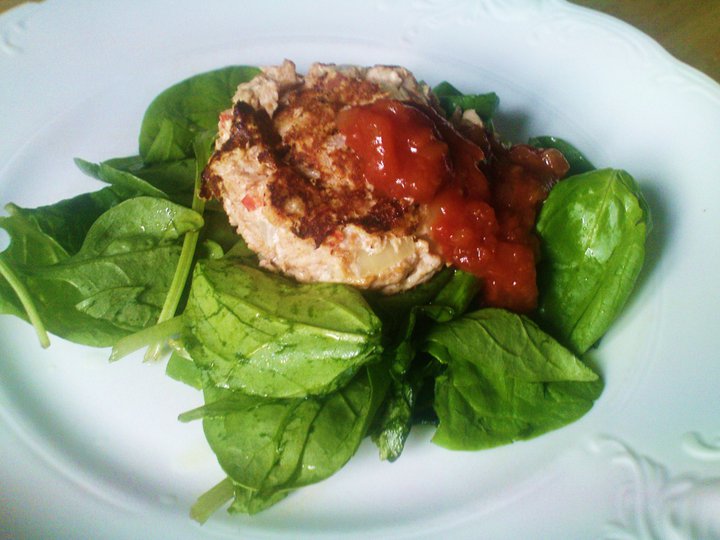
TUNA MEATBALLS


What a revelation! I have discovered tuna meatballs. Sooo delish! Here's my recipe:

Mix all these ingredients together to make about 7 tuna meatballs: Canned tuna in water (make sure to squeeze out all the water prior), 2 egg whites, 50gr/0.5dl milk, wheat bran to bind it together. Spice it up with chopped fresh red chilli, 1/2 chopped medium yellow onion, 1 tsp Dijon mustard, then ground black pepper, paprika and garlic powder or fresh garlic to taste.

Fry it in rapeseed oil until brown. Serve on a bed of fresh spinach and some salsa. Yummy!

Minus the oil, each meatball is about 30 kcal each. Wow!

Enjoy!

Wednesday, 11 August 2010

10 FITNESS MYTHS


Fitness Myth 1:
No Pain, No Gain
Exercise does not need to hurt to be good for you. In fact, if it does hurt you’re probably doing something wrong. Some soreness is common for a first time exerciser, but if that continues, you are pushing way too hard. Delayed onset muscle soreness, in which pain occurs up to 48 hours after exercise, results from inflammation and microscopic tears in the elastic tissues that surround muscle fibers. To give muscles time to adapt, don’t do much too soon, or you will risk injury.

Fitness Myth 2:
Excessive Sweating While Exercising Means You’re Not Fit
In fact, it's just the opposite. Sweating during exercise is a sign of an efficient cooler. An athlete who has adapted to keep the body core cool during exercise will shunt blood to the skin’s surface more quickly and release heat from the body. At the same time, the sweat glands increase their output and thus cool the body during sweat evaporation. While fit people produce more sweat than sedentary folks, they lose less sodium, because more of it is reabsorbed by the body. The result is a more efficient cooler.

Fitness Myth 3:
If You Stop Exercising, Your Muscles Will Turn to Fat
Fat and muscles are two different tissue types. One can not convert to the other. The truth is that muscles atrophy when not used. Therefore, if you continue to eat as you always have, but stop exercising, you will see an increase in body fat and a loss of muscle mass. Of course, the real question is why are you stopping exercise in the first place?

Fitness Myth 4:
You Can Increase Fat Burning By Exercising Longer at a Lower Intensity
It really isn't important what percentage of energy during exercise comes from fat or carbohydrate. What matters at the end of the day is how many total calories were expended. The higher the exercise intensity, the more calories are burned per minute. Many new exercisers, however, are encouraged to exercise at a lower intensity because high-intensity exercise is difficult to sustain, and safer.

Fitness Myth 5:
If You Exercise, You Can Eat Anything
If you try to make up for poor nutrition by exercising, you are going to be disappointed. While eating poorly and not exercising is far worse for your health that eating poorly and exercising, you will get the most out of your workouts if you fuel them with high quality foods.

Fitness Myth 6:
If You Don't Work Out Hard and Often, Exercise Is A Waste Of Time
Nothing could be farther from the truth. Research shows that even moderate exercise, such as walking and gardening a few times a week, can have tremendous benefits. One study found that gardening for as little as an hour a week reduced the risk of heart disease.

Fitness Myth 7:
Exercise Can Fix All Your Health Problems
While consistent exercise can make a huge difference in quality and quantity of life, it can't fix everything. Individuals with other health issues and diseases still need to follow a physician's advice when it comes to disease management protocols. And although exercise alone can not guarantee your health, or cure you of illness, regular physical activity has been shown to help everything from arthritis and heart disease to asthma and diabetes.

Fitness Myth 8:
Weight Training Will Bulk You Up
Many women use this excuse to avoid weight training. What they don't realize it that weight training is often the easiest and quickest way for women to lose body fat and increase muscle definition.

Fitness Myth 9:
To Build Muscle Requires Massive Amounts of Protein
There is no scientific evidence supporting the popular belief that athletes require massive amounts of protein. According to Dr. Suzanne Nelson Steen, head of the University of Washington Huskies Sports Nutrition Program, strength athletes require just slightly more protein than other individuals and still need adequate carbohydrate to replenish muscle glycogen. She points out that all high intensity, powerful muscle contractions (such as weight lifting) are fueled with carbohydrate. "Neither fat nor protein can be oxidized rapidly enough to meet the demands of high-intensity exercise. Adequate dietary carbohydrate must be consumed on a daily basis to restore glycogen levels." To build more muscles, you simply have to follow a good weight training program and eat a well balanced diet consistently.

Fitness Myth 10:
The More Exercise The Better
Of course you can get too much exercise. Many top athletes give in to this myth, and many pay the price with injury, illness and depression. When it comes to exercise, you need an appropriate balance of training and rest in order to perform optimally.


Taken from About:Sportsmedicine.

Tuesday, 10 August 2010

JACKIE'S 10 TIPS FOR GETTING IN SHAPE


1. It’s not how long, it’s how strong. Incorporate 20 minutes of high intensity cardio each day. Walk fast on a treadmill for 2 minutes at a 15 incline then sprint for 2 minutes on flat ramp. Cool down for 1 minute and repeat this cycle 3 more times until you reach your 20 minute goal.

2. Women, make sure to include weight training at least 3-4 days a week. If you add 3-5 pounds of muscle to your body, you will burn 250-500 extra calories per day which equals 3-5 pounds of fat loss per week.

3. Visualize the muscles you are working on - this is called the mind muscle connection and it will actually increase tone.

4. Your body hits a plateau with cardio and resistance training in one month so change your weight, reps and exercises accordingly.

5. The fastest way to get the body you want is through my power circuit training. Combine 3 upper body exercises and 3 lower body exercises together to make one big set. Do not rest in between and alternate quickly from upper to lower for maximum fat burn.

6. The only muscle groups that really burn fat are the primary muscles like the chest, back, quads, glute and hamstrings. Focus hard on those!

7. You have to eat within an hour of working out to make sure you’re not eating into the muscle for energy. Make sure that you combine proteins and carbs like a blended protein shake with fruit and peanut butter or a piece of fruit with a low-fat string cheese.

8. Don’t just set a weight goal, set a physical goal too like running a 3k or training for a charity marathon. Human beings are competitive and you will spark that inner competition by trying to reach a difficult physical goal.

9. A little thing like changing your music playlist every week can go a long way. The more your mind is stimulated during your workouts, the better your results will be.

10. Instead of focusing on being fat, you’ve got to focus on being fit. If you think healthy, it eventually becomes reality to you. I always push my clients to focus on how strong they’re getting, how well they’re sleeping, and how happy they’re feeling by exercising.


Take from Amazon Exclusive: Read Jackie Warner's Ten Tips for Getting in Shape, from Her Book This Is Why You're Fat.

THOSE LAST 10 POUNDS AND LEPTIN


Why do those last few pounds of fat seem next to impossible to shed? You’ve been painstakingly following a weight reduction program for the past few months. You look and feel better than you can ever remember, but one thing is wrong - that last bit of fat is clinging to you for dear life.

Almost anyone who has tried to lose excess body fat can relate to this problem. Why do those last few pounds seem next to impossible to shed? The secret may lie within a little-known hormone called leptin.
A hormone produced by our fat cells, leptin plays numerous roles in our biochemistry. One of these is to regulate bodyweight by sending satiation (fullness) signals to the brain. Another is to increase our overall energy expenditure - our body’s ability to burn fat.

When we lose body fat, leptin levels decline along with the excess fat. When we gain fat, leptin levels rise.
In fact, leptin does its job so well that one human study presented in the American Journal of Clinical Nutrition showed that moderately overweight healthy women following a low-calorie diet over a three-month period actually increased their appetite two-fold. The subjects who experienced the greatest decline in leptin levels also experienced the greatest increase in their desire to eat.

Leptin also has the ability to lower our metabolic rate by negatively affecting the conversion of thyroid hormones when we skip meals or severely restrict our calories. The end result is we find it next to impossible to lose any more fat.

A human study presented in the Journal of Clinical Endocrinology and Metabolism proved that the thyroid-lowering effects brought on by declining leptin levels - through weight loss and dieting - could actually be reversed by administration of “replacement” doses of leptin. But before you go asking your family doctor for an injection of leptin, let me explain how you can naturally stimulate its production.

Don’t be deceived by the “fad diet promise” of losing tons of weight in minimal time. Severe caloric deprivation will send leptin plummeting. Instead, teach yourself to eat smaller meals five or six times a day. Whatever you do, don’t skip meals because that only leads to lower levels of leptin and negative changes in your thyroid hormones.

Another little trick is to supplement with the mineral zinc (10 to 30 milligrams, depending on individual needs). Zinc has been shown in studies to raise leptin levels. In fact, a study published in the journal Life Science showed that zinc was able to increase leptin production by a whopping 142 percent.

So try a little zinc and say ta-ta to those last 10 pounds.

Written by Brad King for Alive.com .

Monday, 2 August 2010

BEYOND RIPPED: ENTER THE SHREDDED ZONE THIS SUMMER

Photo: SimplyShredded.com

"Life, they say, is full of contradictions, so why shouldn’t that also apply to working out? You train regularly with both weights and cardio and carefully watch what you eat, which together are supposed to produce a ripped, muscular physique.

There’s the catch: supposed to. But what if you do practically everything you can truly giving 110% to your training and nutrition efforts and you’re still a little soft around the middle? Are you forever doomed to wearing tank tops on warm summer days so friends can see your big guns without knowing there’s an inch to pinch?

This being SimplyShredded.com, we’re not going to recommend an expensive liposuction operation. (Unless, of course, your beloved and rich Uncle Fred left you with several hundred thousand dollars, in which case you can skip this article and call your plastic surgeon.) Rather, we’ve complied a series of tips, tweaks and techniques for you to add to what you’re already doing during the course of a day. Instead of asking you to drop your workouts and follow some one-size-fits-all program, we’ve come up with a list of ways you can increase your caloric deficit each day.

All of the tips presented here use one or more of three bodyfat-fighting strategies: reducing the amount of food you eat (the calories you take in), increasing the amount of exercise you perform (the calories you burn) and boosting your metabolic rate (the number of calories your body requires for body weight maintenance).

Added together, these tips and strategies could theoretically help you synergistically burn up to 3,650 calories a day, but most individuals will want to pick and choose items that allow them to burn up to 1,500 calories* a day without requiring a significant change to diet or training regimen. You can still perform the same weight-training exercises and routines just add our training and nutrition tips to the mix."

(To read the full article and the shredded tips, go to: SimplyShredded.com )

Sunday, 25 July 2010

PEN & PAPER TO MANAGE STRESS

Some of my journals

Ever had one of those days when you have so much to do that you don't even know where to begin? Or when you have so many thoughts and emotions swimming in your head that you don't know which end is up? Or you have no clue what, when or where your time and effort is being spent? I know what it's like...

When you're stressed out or something is bothering you, sit down and write. Getting your thoughts on paper helps to identify stressors and to come up with solutions. Plus, it just feels good to get it all out!

If you don't do so already, I recommend keeping a journal and writing in it regularly. Writing for just 10 to 15 minutes a day can make a huge difference in your stress level and your mind-set. Many people do it online, but also consider it doing it the old-fashion way, pen and paper. Get yourself a notebook and write away.

Need some ideas to get started?
  • Your day. Simply writing down a play-by-play of your day can get your thoughts flowing and steer you to other topics.
  • Your goals. Writing about the person you want to be and the life you want to live can help you visualize your dreams and come up with a plan for making them real.
  • Food & Exercise. Here's a perfect opportunity for you to monitor and see how much and what you eat and exercise during the days. It can be a way for you to find out if you're really putting in the effort that you think you are, or just keeping track of it to see what works and what doesn't.
  • Specific problems or worries. Write about the things that stress you out or events that have upset you in the past. Describe how these things make you feel, and why, and brainstorm a list of actions you can take to counter these problems and feel better.
  • Priorities and to-do lists. This is a must for all us multitaskers and responsibility jugglers! When you feel overwhelmed, write down all the things you have to do and prioritise them.
  • What you're thankful for. This might sound cheesy, but trust me, it can help you think more positively. Your life will always have room for improvement, of course, but taking time out to acknowledge and appreciate the good things can help you put everything else in perspective.

When you're writing, resist any perfectionist urges. Don't edit yourself, and don't worry about spelling or how your prose sounds. You're not writing for posterity, or for anyone else's sake, you're doing it for youself.

Monday, 19 July 2010

#1 WORKOUT TIP

What's the #1 tip to make your workout the most successful you can possibly make it. Well, it's clearer than what you might believe. HYDRATE: Drink plenty, plenty of water! Not only does it help pull your big guns out when working out and make you sustain and burn more calories, but it also helps with with digestion as well as making your skin, hair and nails, well your whole body, feel better.

So reach for at least 8-10 glasses of water each day. If you lose count or don't know how much it is, fill a 2-3 litre jug up with water and keep it in the fridge. By the end of the day that jug should be empty and you feeling great as a result. :)

Sunday, 18 July 2010

BOB HARPER CORE CHALLENGE

Do you want, and need, to challenge your core muscles to the absolute max? Try this Bob Harper core routine out.

Saturday, 17 July 2010

EGG YOLK USES

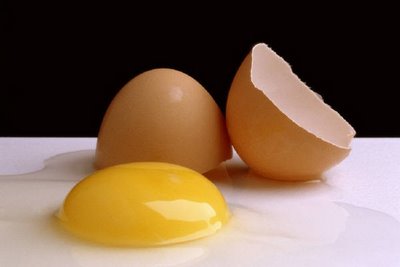
If you're like me, using loads of egg whites to bump up your protein intake and keep your calorie count down, and on top of that have run out of options on how to use up all those egg yolks instead of dumping them down the drain, then here's a great tip in boosting your hair health.

Egg yolk acts as a natural moisturizer for dry, damaged hair. Egg yolk contains vitamins A, E and D---all nutrients that nourish hair. Vitamins A and E prevent hair loss, including thinning of hair. Vitamin D helps improve the health, texture and luster of your hair. And all three vitamins protect hair from harmful UV rays, chlorine and pollution. Egg yolk can also help you prevent dandruff and maintain a healthy scalp.

For an all natural and nourishing hair mask, mix or whisk egg yolks together with olive oil and apply on newly washed, towel-dried hair. Put a shower cap or dry towel around your head to trap heat inside and keep it on for a minimum of 10 minutes. Rinse hair thoroughly with luke warm water and finish off with cold water to close hair follicles. And voilá, shiny, healthy hair and no egg yolks thrown away in the rubbish. Win-win situation! :)

Other egg yolk uses:
- Feed 1 egg yolk/day (for large dogs) to promote shiny and healthy fur.

- Beat egg yolk and apply on face as a vitamin rich mask. Helps acne prone faces.

Monday, 12 July 2010

DARE TO CHANGE

Personal training is the stuff to be doing if you love fitness as much as I do. But what about myself? It's so easy to take care of others when you have a caretaker personality, and in that spin it's easy to forget about yourself because you live vicariously through others and fulfilling their dreams while yours is put on the shelf.

It's almost gone a week since the first training session with my "victim" and I think it's going really good. When exercising hard, don't be surprised if you get overwhlemed with emotions of all sorts, as hardcore pushing yourself to your limits triggers all kind of mechanisms in your body and can also trigger emotions you didnt know you had. Just go with it, dust yourself off and up you go again.

I'm entering a new phase again. I feel like a snake that sheds its skin during the year. It feels good. Feels uncertain. And it feels a bit scary. But if you never go out of your comfort zone, then how the heck are you suppose to grow and develop new sides of yourself. I say go for change! Go for doing something you never do. I say break free from your own personal chains. In true Wallace spirit: FREEDOM! haha :)

Nite nite. Peace out.

Friday, 9 July 2010

DIZZINESS WHILE WORKING OUT

Are you like me one of the many people who suffer from dizzy spells or light headedness during exercise? Many people seem to suffer from dizzy spells either during exercise or afterwards. If you are one of these people then check the list below to see where you may be going wrong:

1. Running on empty - if you exercise in the morning after maybe 10 hours since your last meal then your body is low on many of the nutrients and energy required to get you through your workout. If your carbohydrate stores (glycogen) levels are low then your body will use your muscles and fat for energy and this can be a strain on your system. Consider eating muesli, fruit, porridge about 1-2 hours before exercise depending on exercise.

2. Lack of fluids - our body's natural equilibrium of water is very crucial - as you perspire you lose water and this can tip you over the edge. Drink water before, during and after exercise but don't overindulge.

3. Low blood pressure - fast movements from standing to lying can cause dizziness in people suffering from low blood pressure. Take your time between transitions or better still perform all your standing exercise and then all your floor exercises.

4. Blood pooling - after heavy leg exercises (squats, deadlifts) blood rushes to your legs in order to fuel your muscles. Ensure you take time to recover after these exercise and give the blood chance to recirculate. Don't sit down, moving around on your feet will help you return back to normal quicker.

5. Anaemia (iron deficiency) - because you have a lack of red blood cells you have less carriers for your oxygen and so can make it harder when exerted to return oxygen back to your brain.

6. Correct breathing - starving your body of oxygen by shallow breathing or holding your breath during exercise is a definate no-no. Concentrate on your breathing and this will not only get you through your exercise session but can improve your lung capacity and control your heart rate too.

7. Too much too soon - if you have been away from exercise for sometime or are trying something new then the shock to your body can cause spells of dizziness.

If after following this advice, or you still feel concerned about your dizzy spells, then consult a doctor.

MINT SUPERFOOD HEALTH BENEFITS

Peppermint tea is one of the most popular herbal infusions. It's refreshing, the flavor is clean and sweet, and it feels good to drink after a heavy meal. But did you know that mint holds some of the best health benefits?! Recent studies have even showed that if exposed to the peppermint scent a few times a day, it actually lowers your appetite and in return makes you consume less calories per day.

Soothe Your Tummy With Peppermint
In the world of health research, trials have repeatedly shown the ability of peppermint oil to relieve symptoms of irritable bowel syndrome, including indigestion, dyspepsia, and colonic muscle spasms. These healing properties of peppermint are apparently related to its smooth muscle relaxing ability. Once the smooth muscles surrounding the intestine are relaxed, there is less chance of spasm and the indigestion that can accompany it. The menthol contained in peppermint may be a key reason for this bowel-comforting effect.

Potential Anti-Cancer Agent
Interest in peppermint has extended well beyond the digestive tract, however. Perillyl alcohol is a phytonutrient called a monoterpene, and it is plentiful in peppermint oil. In animal studies, this phytonutrient has been shown to stop the growth of pancreatic, mammary, and liver tumors. It has also been shown to protect against cancer formation in the colon, skin, and lungs. These animal-based studies have yet to be matched by equally sound human studies, however.

An Anti-Microbial Oil
Esssential oil of peppermint also stops the growth of many different bacteria. These bacteria include Helicobacter pylori, Salmonella enteritidis, Escherichia coli O157:H7, and methicillin-resistant Staphylococcus aureus (MRSA). It has also be found to inhibit the growth of certain types of fungus as well.

Breathe Easier with Peppermint
Peppermint contains the substance rosmarinic acid, which has several actions that are beneficial in asthma. In addition to its antioxidant abilities to neutralize free radicals, rosmarinic acid has been shown to block the production of pro-inflammatory chemicals, such as leukotrienes. It also encourages cells to make substances called prostacyclins that keep the airways open for easy breathing. Extracts of peppermint have also been shown to help relieve the nasal symptoms of allergic rhinitis (colds related to allergy).

A Rich Source of Traditional Nutrients
Peppermint also delivers a wide range of traditional nutrients. Peppermint is an excellent source of manganese, vitamin C and vitamin A, the latter notably through its concentration of carotenoids, including beta-carotene. Both vitamin C and beta-carotene seem to play a role in decreasing colorectal cancer risk. Vitamin C, the main water-soluble antioxidant in the body is needed to decrease levels of free radicals that can cause damage to cells. Some studies have shown a link between increased vitamin C intake and a decreased risk for colon cancer, possibly by as much as 40%, while other studies have shown that vitamin C intake can help to decrease the incidence of colon tumors. Beta-carotene and other carotenoids have been shown in some studies to decrease the risks of developing both colon cancer and rectal cancer. Carotenoids have also been shown to increase cell differentiation and protect cells against carcinogenic chemicals that could damage DNA. Vitamin A, which is structurally similar to beta-carotene, may help to decrease risk by preventing excessive colon cell proliferation and tumor formation.

In addition to all of the above healing properties, peppermint is a very good source of dietary fiber, folate, iron, magnesium, and calcium, vitamin B2 (based on its few calories and high nutrient density). This high nutrient density and low calorie status qualified peppermint as a good source of omega-3 fatty acids, vitamins B2, potassium and copper.

Information taken from The World's Healthiest Foods website.

EXERCISE: GOOD FOR BODY, GOOD FOR MIND

It may come as a surprise to you that I don't love to exercise. Sometimes I actually hate it. But I do it anyway, because the rewards far outweigh whatever discomfort I feel during a workout. Regular exercise leads to better health, more energy, a lower risk of heart disease and diabetes, and a longer life. But it isn't just the physical benefits of exercise that push me — it's what it does for my mental health.

The mental-health benefits start right after you exercise. Have you ever noticed how good you feel when you complete a workout? That you feel relaxed, or even euphoric? That mood lift, often called "runner's high," comes courtesy of natural morphine-like chemicals called endorphins. Exercise floods the brain with endorphins, which help to relieve pain, enhance your mood, and relieve stress.

But the feel-good effects don't stop after the endorphin rush subsides. Over time, exercise provides a major boost to your confidence. As you start working out and getting stronger, your sense of strength in other aspects of your life will naturally flourish as well. To put it another way, if you can survive my workouts, you can do anything — and when you feel that sense of empowerment, nothing will be able to stand between you and the life you want to live.

Thursday, 8 July 2010

HOW MUCH TO EXERCISE EACH DAY

You may have heard the U.S. Surgeon General's recommendation of 30 minutes of physical activity a day. This is intended for people who want to maintain the most basic level of fitness — but not for people who want to lose weight. In a week, 30 minutes a day works out to an expenditure of about 1,000 calories, which is fine if you are looking to maintain your current weight. But if you want to lose, you're going to have to be prepared for a bit more work.

I much prefer the World Health Organization's recommendation of 60 minutes at a time as a starting point for my clients — an hour is ideal to get the most out of your workout and see significant results. Your 60-minute workout sessions should always include a 5-minute warm-up, followed by 50 minutes of your primary cardio or strength-training exercises, followed by at least 5 minutes of cooling down and stretching.

Of course, putting in more time will get you more results — but there's a limit. Excessive intense physical activity releases stress hormones, such as cortisol, into the body. This can actually inhibit weight loss, causing your body to react by storing fat and retaining water out of self-protection. So, to reach your goal, I recommend limiting intense exercise to no more than two hours a session.

Taken from Losing It! with Jillian Michaels.

CHALLENGES PRODUCES RESULT


To strive for something in life, whether that be your career, health or fitness, it's not always an easy task. No, it might actually come as a shock to you how hard you have to work in order to achieve something you really, really want. It might even frighten you how hard or exhausting the task at hand can or will be. Now, you have choices. Is it so hard, frightening and exhausting that you choose to quit the journey. OR... Or do you find your motivation, dedication for the desire of your goal, dig deep inside of you and keep the fight going. It is your choice!

After all, it's your fight. Your desire. Your dream. Your goal. Your journey. People can help you walk down the path, but they can't walk it for you. That is where your own strength will show itself. How much do you want it? How much are you willing to challenge yourself in order to produce the results you want?

Yes, it is YOUR choice!